

Boasting the gravitas of wise-beyond-her-years vocals and a pop precocity that fused alt-era edginess with intricate, informed songwriting, Fiona Apple made waves as soon as her debut, Tidal, landed in 1996, beginning a slow-boil of increasing visibility and acclaim, thanks to singles like Shadowboxer and Sleep to Dream.
Many observers argue she peaked prematurely in 1997 with third single Criminal, a not uncontroversial song that exudes guilt and sordid sensuality. Rev up that Random Jukebox then…
Fiona Apple’s discography is sparse, though conversely brimming with grippingly honest, musically adventurous songs that cement her status as one of pop’s most original personalities. Her deep knowledge of the diversity of music— be it jazz, soul, calypso, or hip-hop — informed the artistic leaps she’d take on her later records, jolting Fast As You Can with a frenetic improvisatory feel and adding deep-down despair to the lush lament of Oh Well.
The singer turned 45 this week, which is both an occasion for Apple aesthetes to offer peachy prayers and I suppose important because it caps a midlife career renaissance after a fallow period in the dusky barrels of the pop wasteland.
Prior to 2020’s Fetch The Bolt Cutters, her fifth album, the dumper years saw an eight-year album-free period where she was reduced to random cover versions of everything from the Waterboys’ eighties anthem The Whole Of The Moon to Pure Imagination, Anthony Newley’s novelty ditty from Willy Wonka & The Chocolate Factory.
More recently, Apple was confirmed as a featured pianist on Bob Dylan’s Murder Most Foul, his epic treatise inspired by the assassination of John F. Kennedy in the context of the greater America, and a plethora of pop culture references from Marilyn Monroe to the Acid Queen.
And queens have feet, as if you didn’t know…
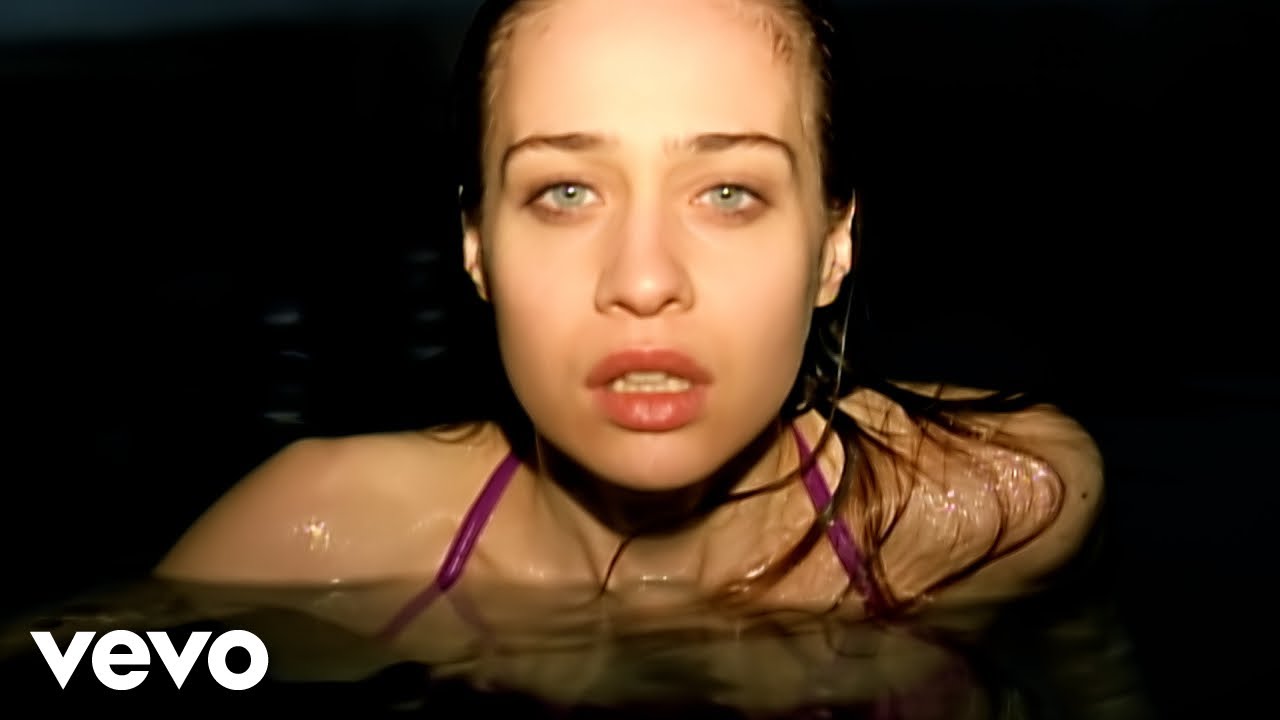
The tinkling cameo with one of the most celebrated sages of music marked something of a rehabilitation for Apple, after one of those life imitating art episodes which saw her not only feeling like a criminal but looking like one — arrested in 2012 by police at a border stop in Texas for hash possession, not sinning against the one she loves as in the song — that birrova classic from the summer of 1997, and which remains Apple’s sole Billboard singles chart entry to date.
Provocatively redolent of a seedy, heroin chic porno filmed circa 1976, the promotional film for Criminal was instantly iconic and crazy-controversial. Director Mark Romanek — veteran of a bevy of music videos including Hurt, Shake It Off, Picasso Baby and Jump They Say — won an MTV Video Music Award for Best Cinematography for expertly marrying a feast of tattered, risqué visuals about self-loathing sexual exploits every bit as unsettling as Apple’s raw singing power demanded — remember, the singer was still a teenager and involved in a non-trivial amount of psychic pain.
Indeed, considering that Apple has been more than open about her struggles with an eating disorder, OCD, and her traumatic history of being raped as a 12-year-old girl, Criminal, both the song and video, takes on added significance in terms of the complex emotions that individuals battling from these types of traumas may feel, including guilt and lack of self-worth.
Take that acceptance speech, for example.
![Fiona Apple – 1997 VMA awards – "This [showbiz] world is Bulls***"](https://stevepafford.com/core/cache/flying-press/7bf67d4f27c5568820455f12e46f3069.jpg)
Lest we forget, Criminal is narrated from the point of view of someone using sexuality to get her way. She’s ostensibly wracked by guilt by her behaviour, but she sure doesn’t sound like it. Apple sings her role convincingly, her rich deep alto voice conveying just the right amount of brazen naughtiness barely touched with contrition.
Musically it’s a complex production, as the song’s dark groove gels with Apple’s smoky vocal and the sensuality of the lyrics. The instrumentation is orchestral and exotic, reminiscent of a swaying burlesque that rides the dynamic interplay between Apple bashing out a series of C-minor chords on the piano and stellar percussion from studio ace Matt Chamberlain (Bowie, Garbage, Macy Gray, Natalie Merchant), with strings and alluring musical effects buffeting from all directions. The ‘flute’ sound is not made by a woodwind, but instead a Chamberlin (an old-fashioned mechanical keyboard, no relation) was wheeled into the studio, played with gusto by Jon Brion.
The haunting keening helps bring a vintage, retro feel to the proceedings, while the song’s sexual tension and uneasy vibe proved compelling enough to fuel it all the way, some quarter century later, to be feted as something of a signature tune for Apple, who won the Grammy Award for Best Female Rock Vocal Performance at the 40th Grammy Awards.
Despite the bullshit world we live in, that’s kinda peachy.
Steve Pafford