


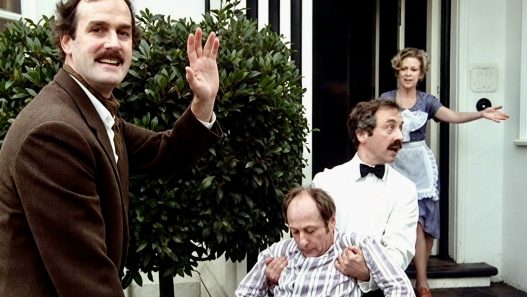




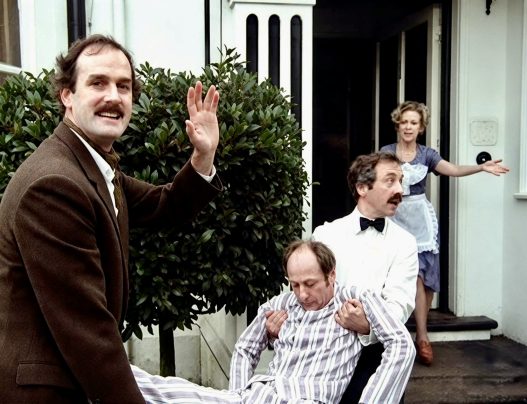
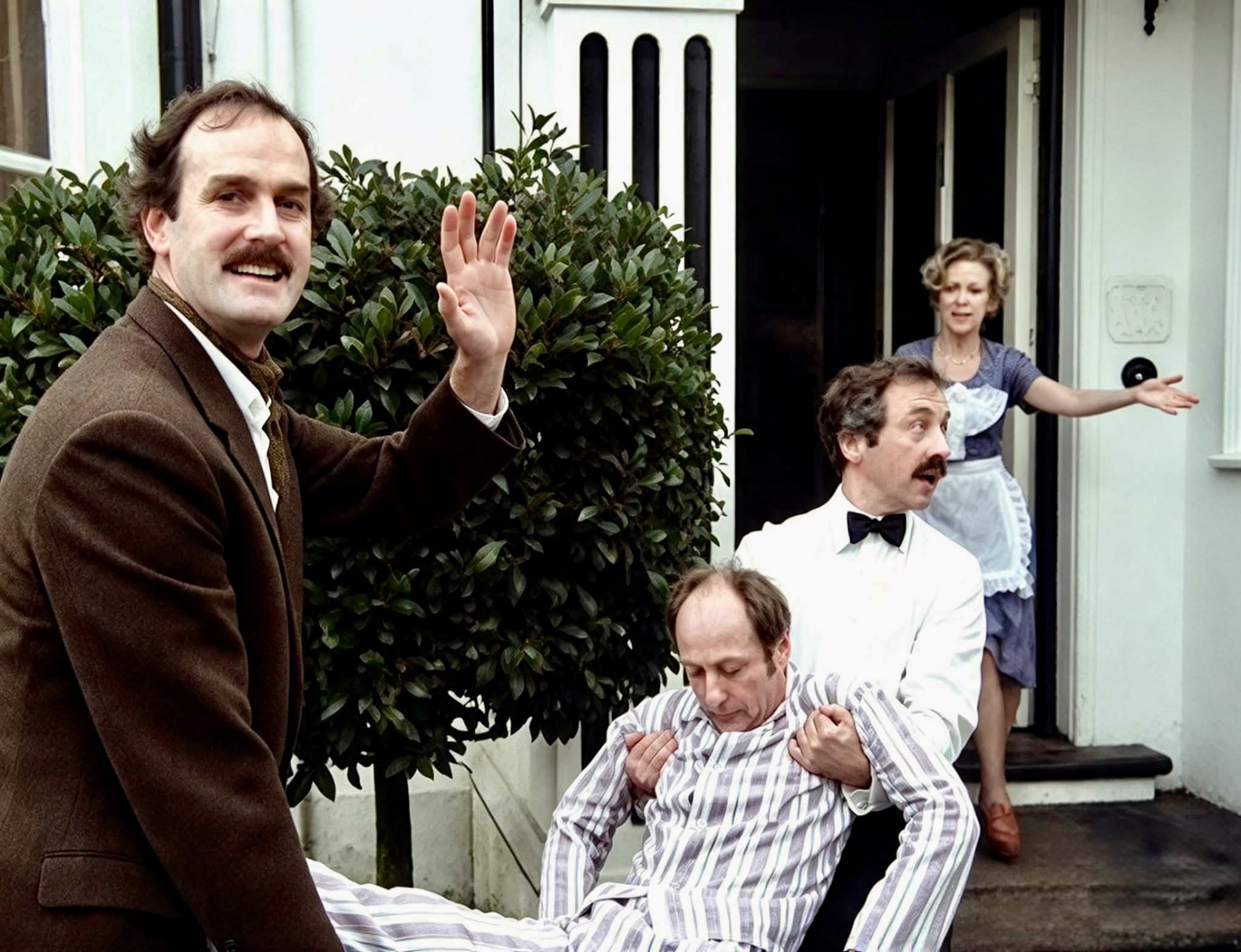
“You’re very cheerful this morning, Mr Fawlty.”
“Yes, well one of the guests has just died.”
Voted the fourth most fabulous Fawlty Towers episode by our small but perfectly formed band of bang-hers, The Kipper And The Corpse was the fourth episode of the second season and the one that finally pushed poor Manuel to breaking point. For lovers of meaty medicinals it’s the one with the dog, the sausages and the doctor too.
A sudden death at a deliriously dysfunctional hotel? Not quite the usual synopsis for a 1970s comedy episode, and a reminder that back in the days when cosy family sitcoms — Robin’s Nest, Bless This House and Terry And June et al — ruled the roost, Fawlty Towers did things differently.
Moreover, the Kipper And The Corpse is probably the most broadly comic episode Fawlty Towers ever did, with its gaggle of guests providing support as a brilliantly eccentric ensemble. They include Geoffrey Palmer as Dr Price; Mavis Pugh as Mrs Chase, plus Richard Davies and Elizabeth Benson as the Welsh Whites, while in the death department Derek Royle is the corpse of Mr Leeman (and briefly as his barely living predecessor), and rounding out the alphabet are the undertakers Robert McBain as Mr Xerxes; Pamela Buchner as Miss Young; and Raymond Mason as Mr Zebedee.
Is it me or would they have been over-egging the pudding by naming Chase’s dog Dougal instead of Prince? Anyway, let the tragic roundabout commence.
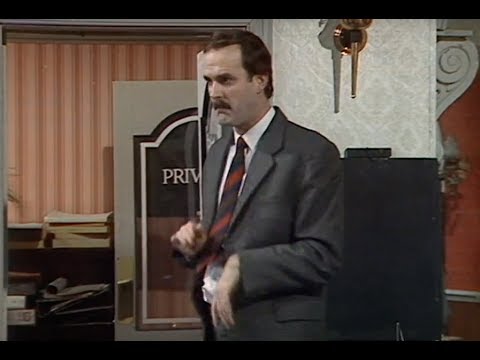
Having to deal with an annoying corpse at the great Torquay emporium proved to be a master stroke, an event that sends Basil cold crazy; his main worry being where to put the body.
The Kipper And The Corpse was based on a recollection told to John Cleese by the entrepreneur Andrew Leeman, who regaled him with stories of his trainee hospitality days. In particular the morning he found a dead body in a bedroom at the posh hotel on the street our almost as posh publisher Steve Pafford was born on, the Savoy on London’s Strand. The trick was to get the corpse out of the building without any of the other guests noticing, which is why the unfortunate visitor in this episode was named in his honour.
The ensuing story is 30 minutes of unimaginable laughs, with so many memorable characters. With his commanding, distinctive baritone and dry comedic timing the instantly-recognisable Palmer is a delight as the venerable sausage-loving Doctor who wants to eat now (“I’m a doctor. I’m a doctor and I want my sausages” remains a family line to this day), and Pugh as the dog-loving harridan are both completely unassailable.
“You make sudden movements like that and of course he’s going to bite. Don’t you have dogs in Calcutta?”
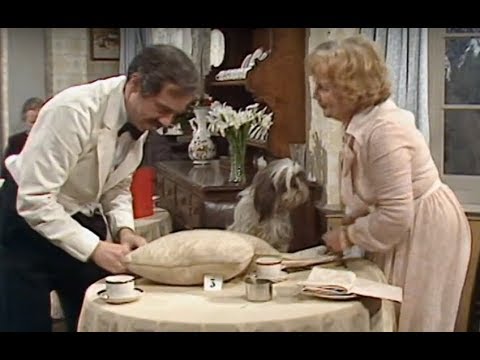
Happily, even the often cameo-limited regulars get to play substantial parts, with the dear old spinsters Misses Tibbs and Gatsby (Gilly Flower and Renee Roberts) seeing their roles expanded, and for the only time in the series demonstrating they’re not joined at the hip after all. Indeed, the indomitable Tibbs (“I’m 79!”) really comes into her own and provides some of the biggest laughs, so much so it’s a shame she and Miss Gatsby didn’t get more to do elsewhere.
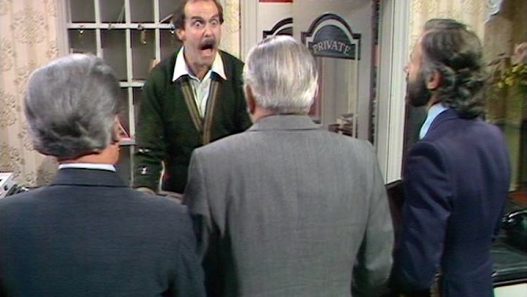
Cleese as our henpecked hotelier is at his very best here, whether it’s sucking up to the authoritative doctor or badgering the ailing Mr Leeman for wanting breakfast in bed (“Is it your legs? Most of our guests seem to struggle down in the morning.”). The standout moment being the woefully self-absorbed Basil totally oblivious that his guest has died, rabbiting on about British Leyland and car strikes, so wrapped up in his chaotic morning/moaning.
Before he becomes the second half of the title, Leeman is shown as a posh paws businessman who retires to his room suffering from what appears to be indigestion. Sybil sympathises with his condition and offers to provide him breakfast in bed the next morning, but as an indication she’s as bad a manager as her husband Mrs F keeps chucking him option after option when he obviously just wants to go lie down and think of anything other than food.
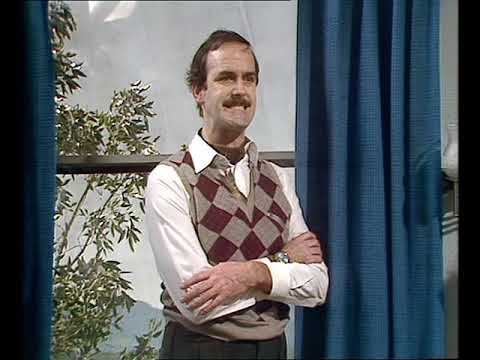
Basil of course makes it worse by sarcastically asking “Rosewood, mahogany, teak: what would you like your breakfast tray made out of?” Then takes personal offence at not being told “Good night” that he spends the rest of the evening angrily muttering to himself.
In a moment that says a lot about the psychological abuse he’s been under for years, our favourite benzedrine puff adder ends his rant with an imitation of his shorter half’s hissed “Basil!” and slaps his own wrist in sarcastic self-admonishment.
Cleese delivers a comedy masterclass, and fair play to the Welsh couple who want to get in their room, resulting in some much-quoted exchanges between them and Fawlty.
“Have you locked this?”
“Only slightly.”
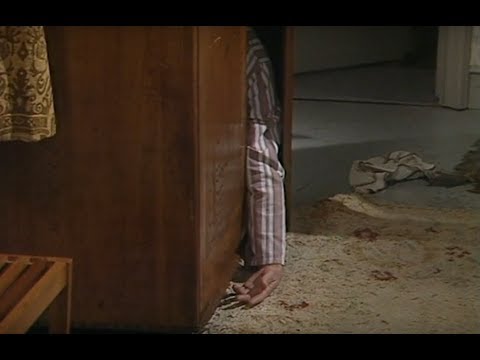
“What’s that moaning? It’s coming from the cupboard!”
“Well, we’ll get some oil.”
If ever I’m down, or have had a bad day, all I have to do is turn to this episode like an old pair of slippers, and it never fails to make my Welsh sides ache, even if it’s only from some angles.
And even though I know it word for word, I’d argue The Kipper And The Corpse is the ultimate episode. And that blow-up doll is pure heaven. Though it’s worth remembering not everyone was a Fawlty fan.
When the first series aired in 1975, one of its harshest critics was Private Eye’s Richard Ingrams, then trenchant TV reviewer for The Spectator, who wrote a caustic review skewering the programme unsparingly, and challenging the notion that Cleese was even funny.
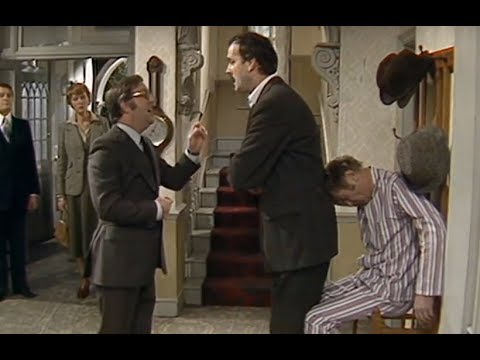
Rather than let it go, our wit from Weston-super-Mare decided on a cheeky bit of revenge.
When Manuel and the hapless hotelier were trying to find a hiding place for the corpse, they burst into a room they thought was empty, only to find a newly arrived guest called Mr Ingrams (Charles McKeown, one of the few Fawlty guests still alive) in his pyjamas sitting on the end of the bed blowing up an inflatable sex doll, oblivious to the mayhem around him.
They make their excuses and left, but, amid chaos, it’s a deliciously tongue-in-cheek in-joke: a small gag in a larger farce — and one of the most famous examples of John Cleese getting even with a real-life journalist who took his work to task.
Is finished. Bye-bye, please, bye-bye.
Paul Richard Evans


