




“Exile On Main St. wouldn’t have happened without Keith Richards’ heroin addiction. Young Americans wouldn’t have happened without Bowie’s cocaine addiction. Alcohol played a big part with Vincent van Gogh. You need that edge. The trick is to find the edge without killing yourself.” — Duran Duran’s John Taylor, 2003
Published on 4 September 2025, Record Collector Presents… Rolling Stones (Vol 2: Domination 1970-79) is a 116-page special edition magazine dedicated to the second, post-Decca, post-Brian Jones era of the world’s greatest rock ’n roll band.
In other words, the sophomore years as powered by Atlantic and WEA/EMI from Sticky Fingers to Some Girls. As ever, Bill’s thrilled, he loves huge openings.
Never not wanting no trade, I’m happy to report that the mononym mag’s brilliantly conscientious editor Charles Donovan commissioned two lengthy pieces from yours truly for this second volume. And as July 14 happens to be France’s la fête nationale — or, en anglaise, Bastille Day — first, I’ve decided to laser-focus on a raw and rambunctious rewind back to 1972 while staying granularly Gallic.
Setting up shop on RCRSV2’s pages 18 to 22, I, with a useful album addendum from a fellow Bucks boy, veteran scribe Kris Needs, assess the Fab Five’s second long-player of the decade — and Mick Taylor’s sophomore studio set with the Glimmers — which came together in coruscatingly cluttered conditions on an exclusive corner of the French Riviera, from where I’m republishing this exclusive unedited version.
Sucking in the Seventies? Hardly. The dense Delta blues meets Côte d’Azur chaos of Exile On Main St. is many people’s favourite Stones album. Moreover, in his Editor’s Letter, Charles offers:
“In the 1970s, the Stones asserted themselves as a brand with a renewed vision and clarity. But no sooner had they freed themselves from [the vice-like grip of Allen Klein’s company] ABKCO and founded their own label, they were under siege by the UK government and then, as exiles, by the French authorities.
“Steve Pafford has retraced their steps and visited Nellcote, putting this period into context with Kris Needs. Talking of Nellcôte (sic), it doesn’t need a circumflex over the ‘o’, no matter what certain leading newspapers might think. The property (originally Château then Villa Amicitia) was rechristened Nellcote by an American family who brought the name over with them from Riverdale, NY.
The accent is a modern journalistic affectation which I was a millimetre away from perpetuating until author Geir Hørnes enlightened me. What bound us together was a genuine appreciation of and fascination for The Rolling Stones in the 1970s.”
Couldn’t have put it better myself.

RETURN TO NELLCOTE
STEVE PAFFORD, RC’s man in the south of France, recalls the drama of The Rolling Stones on the Riviera… and revisits the site
Exile On Main St. is often regarded as top of the crops when it comes to The Rolling Stones’ post-60s catalogue. Released in the middle of May 1972 (a whole month before another career-defining loosely conceptual album, David Bowie’s Ziggy Stardust And The Spiders From Mars), the band’s opus No 10 features two famous 45s: Tumbling Dice and, in the US at least, Happy, with the latter being the only single with Keith Richards on lead vocals to reach the Billboard Hot 100 to date.
But the sprawling sessions were far from cheery, and fraught with difficulties and divisions as the band effectively split into two camps, those in favour of recreational substances (Richards, Taylor) and those generally against (Jagger, Wyman, Watts).
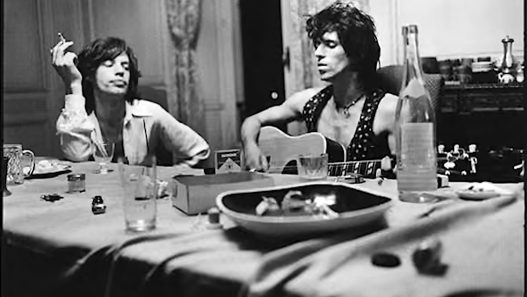
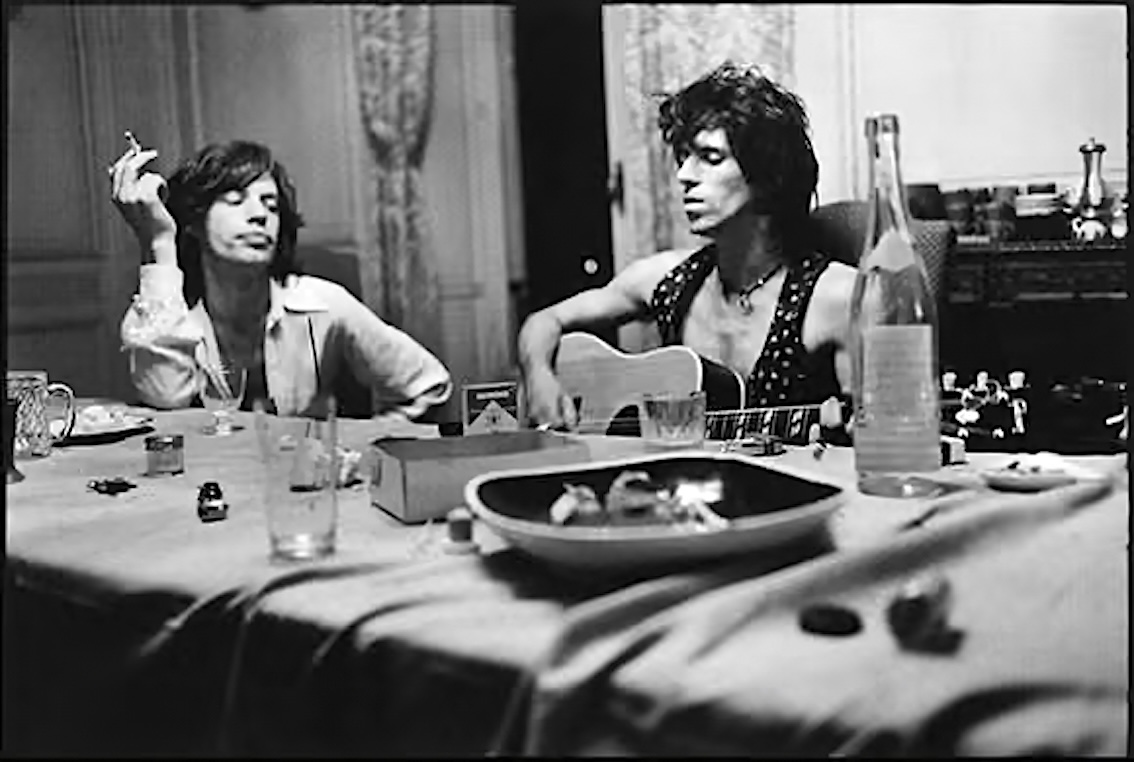
The fab five arrived in France in April 1971, setting up a makeshift recording facility at Nellcote, the Riviera waterfront villa that served as the temporary residence of Keef, his partner Anita Pallenberg and their infant son Marlon. As hedonistic hangers on partied downstairs in its multi-roomed basement the lads laid down material in what became one of the most notorious episodes in the Stones’ storied history. With grunge and groupies at the forefront, there is certainly a realisation that the quintet chose convenience over sonics, which is reflected in the resulting album’s lo-fi lack of clarity.
“It’s got a raw sound quality, and the reason for that is that the basement was very dingy and damp,” the band’s newish guitarist Mick Taylor explained to the Guardian. “The roof leaked and there were power failures. We had to deal with all that, and go with the flow.”
The flow Taylor alluded to was the endless coming and going of the lads’ support network. Visitors included Gram Parsons, William S Burroughs and John and Yoko, while there was also a parade of music industry big cheeses, groupies, junkies and journalists.
Sidemen were kept busy, too. Bobby Keys, the Texan saxophonist famous for honking on Brown Sugar and every Stones record from ’69 to ’74, looks back on the seaside sojourn fondly: “I didn’t mind living between Nice and Monte Carlo, didn’t mind that a bit. I didn’t mind all them pretty girls around the countryside. Yes sir, buddy! That’s when you’re shittin’ in tall cotton!”

For all the blissed out summer vibes on the sun-kissed bay, a more prosaic reason had inspired the band to jump ship. With costly litigation with Allen Klein’s ABKCO set to drag on for years, if not decades, the fivesome spent much of the previous year-and-a-half getting their business affairs in order. First up was the Sticky Fingers LP on Rolling Stones Records, buoyed by a lucrative long-term distribution agreement with Warners.
Consequently, if they stayed in economically stricken Blighty, much of the resulting profits from the album and a forthcoming American tour would be eaten up by a nominal 90-odd per cent rate of income tax for top-rate earners with investments. All this under Edward Heath’s so-called capitalist Conservative government to boot. The band were for turning.
With merchant banker Prince Rupert Lowenstein installed as their new financial manager, the German came up with an ingenious idea. After a brief UK “farewell” tour that March, dubbed Goodbye Britain, at the start of the new tax year the quartet went into exile across what our Gallic cousins call La Manche… and brought their motor home with them.
Navigating the choppy Channel by boat while its owners flew first class, the shiny and new acquisition — a state of the art £65,000 mobile recording studio inside a DAF F1600 Turbo truck — was transposed to the lower floor of Keith’s sumptuous residence, so they could get to work whenever they felt like it, however erratically that would turn out.
While his bandmates rented various bolt-holes, the Glimmer Twin, never knowingly understated, took a 16-room, 8600 sq ft Belle Époque mansion in Villefranche-sur-Mer. Lying between Nice’s Mont Boron (where Elton John has a summer house) and Saint-Jean-Cap-Ferrat (ditto Andrew Lloyd Webber), this bucolic bayside village would be where Tina Turner made her home in the 1990s, though one suspects her lifestyle was rather more sedate than the salubrious sex and drugs and rock’n’roll that Nellcote became known for.

All gleaming marble and wrought iron, Nellcote, Richards said, looked like it had been decorated for “bloody Marie Antoinette.” “It was an impressive house,” counters Andy Johns, Exile’s engineer and mixmaster. “Somewhat baroque. The heating vents on the floor were gold swastikas. Keith said it had been a Gestapo headquarters in the war. ‘But it’s OK. We’re here now.’”
While the Stones soaked up the sun and the Gallic welcome, Johns and producer Jimmy Miller were holed up outside in the now named Rolling Stones Mobile Studio (RSM) waiting for inspiration to strike the band. As Keith’s recreational diversions continued, it soon became apparent they would be waiting a wee while.
First things first: a jab in the arm. Keef code for getting loaded was “putting Marlon to bed,” remembers Johns. “Nobody really went upstairs. I remember being at the bottom of the stairs once with Jagger and Jimmy Miller, and we wanted Keith. I said to Mick, ‘It’s a band thing, why don’t you go and get him?’ He replied, simply, ‘I’m not going up there.’” Perhaps it was telling that when the guitarist bought himself a speedboat, he called it Mandrax.
Eccentric guests roamed freely while the muggy basement pulsed with a mix of grit, soul, and distortion. Substance abuse was rampant, and discipline scarce – thrill-seeking drug runner Tommy Weber even arrived with a pound of pharmaceutical grade cocaine strapped to the waists of his infant sons, Charlie and Jake. Jean de Breteuil, the man who supplied Jim Morrison with his lethal dose that same summer, bought his way into a fortnight’s stay with a toot of pure pink heroin from Thailand.
As time passed, it became clear that something more musical was needed to help kickstart the creative process. When it did arrive, it came not from the south of France, but – tellingly – from the south of London. The Stones had taken out a five-year lease on what Pink Floyd’s David Gilmour described as “a dingy warehouse with a rehearsal room in it” in Bermondsey Street, a hangover from their closefisted Decca days.
With SE1 then one of more squalid parts of the capital, this two-floor industrial space acted as an infinitely inexpensive answer to The Beatles’ Apple HQ in Saville Row, a place to store their amps and Ampex recording reels which doubled up as a convenient 24/7 rehearsal studio. Rod Stewart remembers that “you would walk in there and there would be all these boxed two-inch tapes and quarter-inch masters on the shelves with things like Honky Tonk Women and Gimme Shelter written on them”.
On a visit to Bermondsey in early ’71, Trevor Churchill, then the newly appointed European label manager for the nascent Rolling Stones Records, noticed a pile of tape boxes lurking in the corner. “I thought, ‘What the hell are they doing here?” he recalls. “So I bounced them on to cassette, then took them to the south of France.”

Having run off quick mixdowns at Olympic Studios in Barnes that spring, Churchill brought with him to France a clutch of tapes that were a combination of demos and unfinished recordings, many of them instrumental or containing gibberish rudimentary lyrics. The staffer says he grabbed them because he thought some of the placeholder titles were interesting, thus he played them to Mick and Keith in the villa’s grand salon hoping to spark some activity.
It’s certainly the case that the boogie-woogie monikers of leftovers like Good Time Women, Bent Green Needles and Dancing In The Light will be unfamiliar to many. However, what they mutated into – finished Exile extracts Tumbling Dice and Sweet Black Angel – are better known, while Dancing was completed for the album’s deluxe redo in 2010.
The remastered Exile would be the first Stones studio set to be expanded with an extra disc of exclusive material, though it was far from complete: only two tracks are presented as unadulterated extracts from the sessions, while outtakes such as a contemporaneous cover of Jimi Hendrix’s Red House have been left in the can. “There wasn’t a master plan,” Jagger admits. “We just accumulated material knowing we would use it one day.”
If nothing else, it adds credence to the widely held belief that the turn of the decade was probably The Rolling Stones’ most febrile and productive period. “That’s how Exile turned into a double album,” Churchill divulged. “They got an extra half a million dollars. They were quite pleased with that.”
While the band ploughed on with their spitball approach to tracking, the days at Nellcote passed in a balmy haze of decadence. “There wasn’t really any pattern, that wasn’t the way they rolled,” says Gretchen Carpenter. “If the kids wouldn’t sleep, we’d take them out in a speedboat ride to Monte Carlo. We’d have cocktails, and the kids would fall asleep on the way. It was the most perfect summer, but everything seemed to go wrong after that.”

What Gretchen refers to is a series of events which precipitated the band’s departure for the US that October. First, there was a burglary at the villa, during which several instruments were snatched. Then the big bust: Keith, Jimmy and several key players began a slide into heavy drug use, which forced a hasty exit out of Europe altogether. The famous five hightailed it to California, where they sifted through the Nellcote tapes, overdubbing, mixing and mastering at Hollywood’s famed Sunset Sound Recorders through to March 1972.
Mick Jagger, like the older, anti-drug Bill Wyman, sat out many of the later French sessions out of frustration, though Marshall Chess writes that the frontman saw an opportunity to reassert his authority and “took control” in Los Angeles, augmenting the basic tracks with keyboard contributions from Dr John and Billy Preston, as well as a roll-call of top drawer backing vocalists.
With his enforced abandonment of Nellcote just five months into a two-and-a-half year lease, the party ended for good two years later, when a court in Nice convicted Keith of using, supplying and trafficking illicit substances in October 1973. His punishment was a one-year suspended sentence and a 5,000 franc fine, as well as being banned from entering France for two years.
It’s an episode that certainly has its place in the annals of rock history, though some individuals might think it’s better left forgotten. Stones In Exile, a one-hour visual jumpback which tied in with the album’s 2010 remaster, saw Jagger and the now departed Watts revisit many key locations – Stargroves, Olympic, Sunset – crucial to the conception, though Nellcote is conspicuous by its absence, possibly a difficult memory for all concerned.

In the documentary, our famous frontman also reveals that certain lyrics were written very much at the last minute, including Tumbling Dice, the inchoate inspiration for which came “after I sat down with the housekeeper and talked about gambling”.
The words to another bawdy betting tune, the crazed Casino Boogie, were assembled by Mick and Keith in the cut-up technique popularised by William Burroughs, a good couple of years before the Thin White Dame adopted the method wholesale on Diamond Dogs. It also gives lie to the notion that the line “Dietrich movies, close up boogies. Kissing cunt in Cannes” generally refers to an episode in Jagger’s opprobriously rampant sex life.
With regards to Nellcote’s non-inclusion, the docufilm’s director Stephen Kijak did put in a request to visit, and its current owners declined to let the building or its extensive landscaped gardens be filmed. Indeed, the villa in Villefranche remains shrouded in mystery. It’s only a half-hour walk from my home on the more elevated Mont Boron but, even so, this place can be a bugger to find.
Set back behind monumentally imposing grand gates, Nellcote is one of the most discreet residences on the eastern extremity of the Côte d’Azur. The estate is barely visible from the coastal road, though if you’re lucky you can catch a glimpse from the sea (it has its own private steps, a concrete cascade which take you almost directly to the Baie de l’Espalmador and its upscale beach restaurant), or up in the foothills of the Alps where Tina’s Turner’s rather more panoramic property was perched, with its sweeping views of the entire Baie des Anges coastal cresent.
What is known is that the harbourside palace was bought by the Russian steel mogul Viktor Rashnikov, who officially snapped it up for a cool 83 million euros (71 million quid to you and moi) in 2007. Alas, he’s a Putin-enabling Russian oligarch currently on an EU sanctions list, meaning that since the brutal invasion of Ukraine the property is frozen for the foreseeable future, having been seized by the French government as punishment.
In a way, perhaps it’s a fitting end to this chapter in the Exile On Main St. story. A judicial end clap to the misted idyll of The Rolling Stones on the Riviera, which seems more circumstantial kismet than fluke roll of the dice.
“I never plan anything,” Richards shrugs. “Mick needs to know what he’s going to do tomorrow. Me, I just wake up, see who’s around. Mick’s rock, I’m roll.”
Steve Pafford

MINING ART FROM EXILE
The Stones began their 1970s with a bombshell after Jagger’s, and now the band’s, financial adviser Prince Rupert Lowenstein recommended sacking manager Allen Klein, who’d deprived them of millions in earnings since 1966. When Keith Richards needed £20,000 to complete his purchase of Chelsea’s 3 Cheyne Walk in August 1969, he’d been forced to dispatch minder Tom Keylock to New York to sit on Klein’s desk until he got it.
With tax authorities such as the Inland Revenue sniffing into their precarious affairs, the Stones were strongly advised at a meeting in February 1970 with their accountants and lawyers to flee the UK to avoid being clobbered for around 90 per cent of their income over £15,000 a year.
On top of that, the band’s Decca contract expired in July 1970 and they disagreed with Klein’s urging to re-sign with the label. Prince Rupert told the Stones they would have to live abroad for two years, allowed to visit their home country for up to 90 days a year. Alas, April 1970 was too short notice so they decided to relocate a year later when they would also launch their own record label.
Rolling Stones Records would be distributed in the US by Atlantic Records with Marshall Chess, son of Chess Records founder Leonard, hired as general manager. Car park magnates Kinney handled the rest of the world. In the meantime, the band spent much of 1970 trying to retrieve rights and royalties, eventually resorting to a £20 million lawsuit against Klein. One compromised outcome would be his ABKCO owning the Stones’ whole catalogue up to Let It Bleed. It still does.
After playing March ’71’s Goodbye Britain tour and a chaotic farewell party at Skindles nightclub on the Buckinghamshire bank of Maidenhead Bridge, attended by Burroughs, John & Yoko, Eric Clapton and assorted mates, the Stones were all out of the country by 5 April, announcing their new label and LP from a shiny yacht in Cannes harbour.
That same month saw the release of the Brown Sugar 45, followed by Sticky Fingers. The Stones’ exile began with moving into the respective French abodes found for them by their team. Bill Wyman stayed in Saint-Paul-de-Vence, Charlie Watts bought a chateau in Cévennes after staying at Cannes’ Hotel Metropol, and Mick Taylor and wife Rose were giddy in Grasse, the celebrated Provençal perfume capital.
The band’s faithful assistant Jo Bergman originally thought that a sprawling mansion near Nice called Villa Nellcote would be perfect for Jagger*, but wife-to-be Bianca didn’t approve so while they holed up in the Hôtel Plaza Athénée in Paris or a villa in sleepy Biot, Richards swooped on Nellcote. The Stones were now exiles from their home country. This hung heavily for years on the guitarist, who never returned to full residence in the UK, though he still spends time at Redlands in Sussex and owns a secluded sanctuary in the Caribbean.
In the early 80s, the guitarist described himself as “a no man’s nomad”, still voicing his protests during our interviews, getting especially rattled at accusations the Stones had become tax exiles cut off from reality and their fans.
“Remember who cut us off?” he grumped. “It weren’t us. We were kicked out. It was that or they tried to put us in the can. They couldn’t do that so they tried to force us out economically, which they did. They just taxed the arse off us so we couldn’t afford to keep the operation going unless we got out. Nobody’s out through their own choice. It wasn’t a matter of choice, it was a matter of no choice; get out. That was it…”
“I mean, it’s understandable; ‘The Stones are rich tax exiles, blah blah blah’ but it’s only alright if you can live like that. If we hadn’t been used to being on the road all the time I don’t suppose any of us would have wanted to go and wouldn’t have gone. But we wouldn’t have been able to keep the Stones together and stay in England so it was a matter of having to get out.
“No point in moaning. The only thing I wouldn’t do is what they’ve tended to do over the last few years; bugger off to Los Angeles and live in that weird, cut-off climate out there. That Rod Stewart syndrome. I probably could have got like that if they hadn’t rubbed my nose in the shit so many times that I never forgot the smell of it!”
Keith Richard’s underlying resentment and screw-you defiance became a crucial factor in the Exile On Main St. story, stoking his two fingered psychological motivation and own version of the indomitable Dunkirk spirit. A decade after their formation in Richmond, the Glimmer guitarist wanted to show the world The Rolling Stones could make a great record anywhere they were forced to hole up, even if it was back in the basement, and promptly recorded what many reckon is the best album of their entire career.
Kris Needs

NELLCOTE CHRONICLES
With thanks to Geir Hørnes and Dominique Tarlé for the use of several photographs from the hardback The Curious Chronicles Of Villa Nellcote by Geir Hørnes. The book is a stunning feat of research and the final word on all matters Nellcote.
Copies are available at nellcotechronicles.com
As of 2026, it’s perhaps unsurprising that of the remaining members of the band it’s Mick Jagger who has maintained a property portfolio in France. Over the years it’s expanded to include a luxury Paris apartment on the celebrated Left Bank, which was meticulously designed by and once shared with his then partner, the late fashion designer L’Wren Scott.
That’s small-fry compared to the 18th century Château de Fourchette, though. A sprawling former aristocratic estate and designated protected historic monument, the vast fortress is an hour from one of my favourite French cities, the Gothic gem that is Orléans, and just 30 mins from Tours, pretty much the most central city in France.
It’s also where the Stones recorded much of 2005’s A Bigger Bang, and sits imposingly on 50 acres of lush, elegantly manicured gardens beside the commune of Pocé-sur-Cisse, a beautifully sparse village in the Loire Valley central wine region. À votre santé!
https://recordcollectormag.com/rc-specials/record-collector-presents-rolling-stones-in-the-1970s
Previously: https://stevepafford.com/missu/


