




“Walk through the night thinking We Are The World…“
— David Bowie & Al B. Sure, Black Tie White Noise
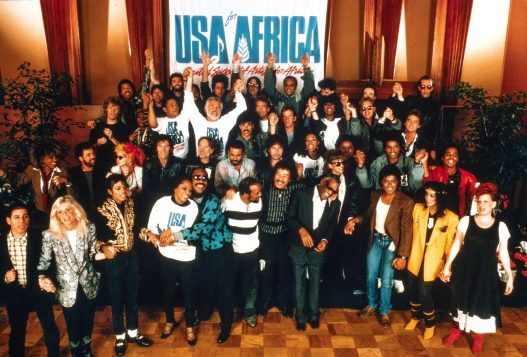
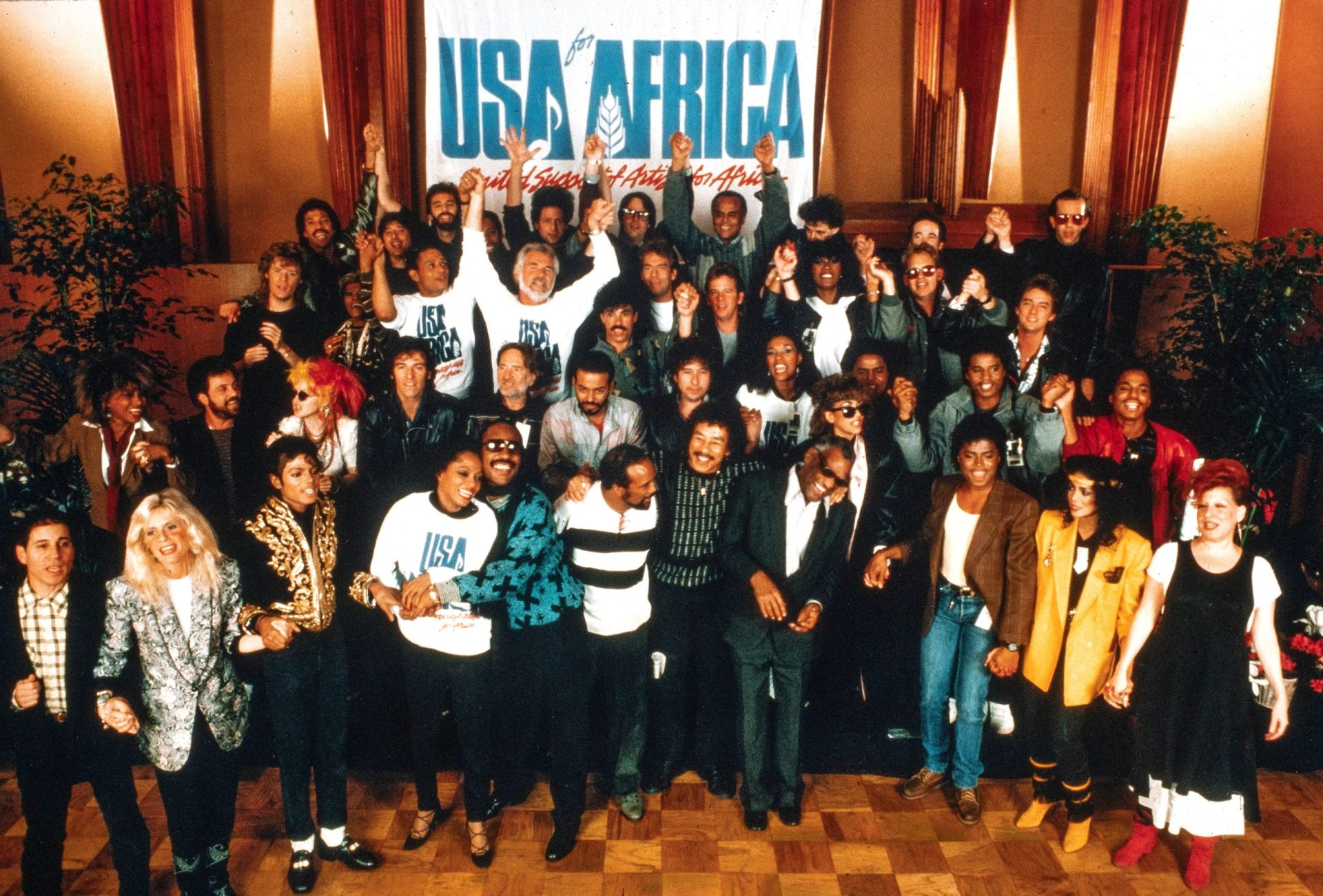
Another late one for Black History Month, I’ve just finished watching the Netflix newie We Are The World: The Night That Changed Pop, about the making of the USA For Africa project. And is that a pig outside the window or was this a good record?
Whatever your view, the programme is a fun, dishy, nostalgic documentary, especially if you’re an X-ennial or older, though I take issue with the title and its wholesomely American-centric vibe for starters. No wonder Bowie took the piss a decade later.
Surely the original British ensemble of two months earlier has a much bigger claim to be “the greatest night in pop” by virtue of the fact Bob Geldof and Midge Ure came up with the idea that spawned both Band Aid and USA For Africa.
Consisting of a cast of a thousand American egos, the new documentary more than a little celebratory — did one solitary charity record really change pop? Er… — but in part it’s an illuminating trawl through the archives as we witness Quincy Jones’ mastery in managing all those star turns, the disorientation between megastars du jour in finding themselves levelled in a room in the wee small hours.
When I watch these music docus I put aside my occasionally flippant tendency to diminish the past and realise that for a number of years in London I had good fortune to be part of the fabric of that world, dealing with so many legendary characters, as if nothing happened, sometimes without even paying attention.
But what of these often appalling, self righteous charidee choons?
Inspired by the Brit ensemble of November 1984, Harry Belafonte had the notion to put together a similar charity record using the biggest stars in America. He pitched the idea to music manager Ken Kragen, who took the idea to his clients Lionel Richie, who brought in Stevie Wonder and producer Quincy Jones, who then recruited Michael Jackson.
But being as wholesomely American as apple pie, the USA For Africa project lacks the likeable, knowing naffness of Band Aid. Plus, Do They Know It’s Christmas? is actually an enduring tune. Still, it did make $11m – and the wider project around $45m – which is not to be sniffed at.
With its DIY charm, I’ve always thought of it this way: despite some clunky lyrics, Do They Know It’s Christmas? is the more evocative song but We Are The World, despite sounding like a coke commercial, boasts better performances.
Its combination of aching sincerity, star power, and good intentions touched a lot of people, but lest we forget, by hogging the top spot it denied a peerless pop song — Tears For Fears’ Everybody Wants To Rule The World, no less — the chance of gold glory.
The fact, of course, We Are The World, recorded on a former film lot – Charlie Chaplin Studios turned A&M HQ – raised a hell of a lot of dosh for a damn good cause. The charge against it, though, is it’s undiluted saccharine pop pap (for the record, I absolutely detest the Fender Rhodes piano ballad sound), and one the schmaltziest, corny, self serving things ever to happen in popular music.
Admittedly, there are some WTF moments in the vocal department: Brooooce Springsteen, the rock god “Boss” sounds like he’s just swallowed a quarry full of gravel while Cyndi Lauper appears to have swallowed Madonna’s entire stock of helium balloons.
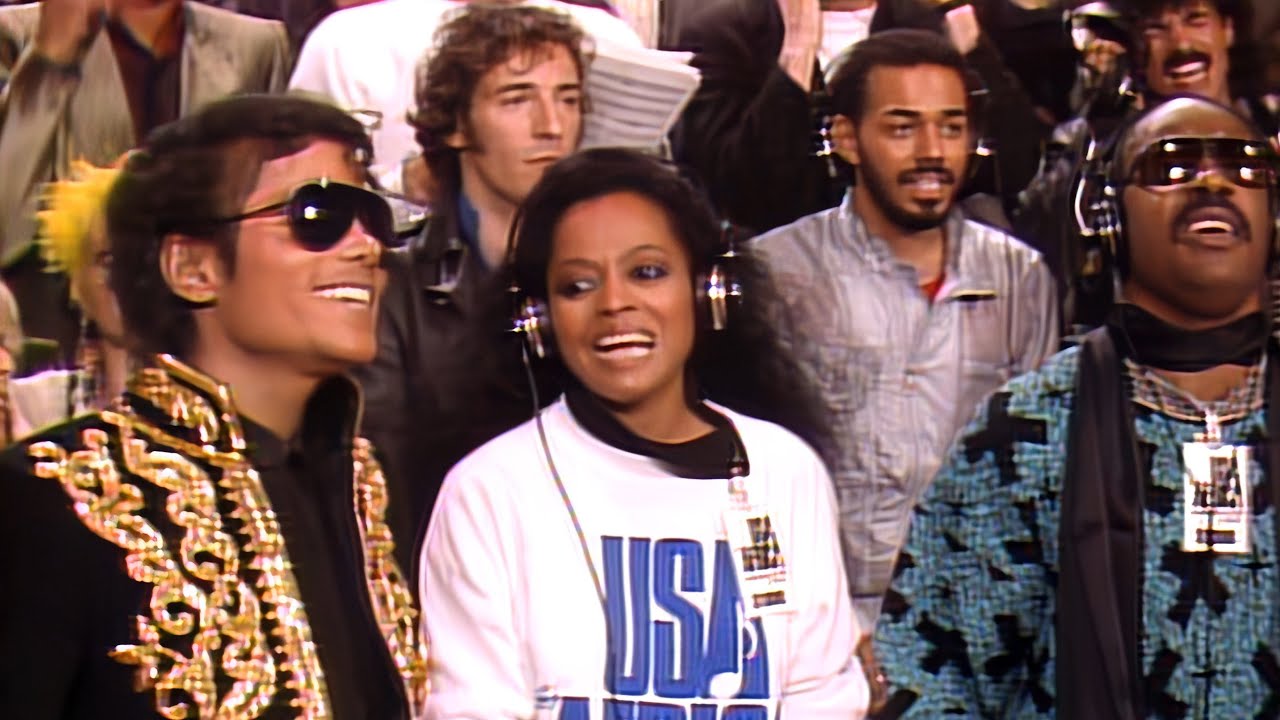
But it gets better, because the contingent marked Veteran Black Divas save the day: Diana Ross exudes a glowing motherly warmth, Tina Turner’s line is solidly dependable as always, and probably best of all, Dionne Warwick’s motive solo is particularly heartbreaking, proving that like the inexplicably absent Aretha Franklin, Donna Summer and Gladys Knight, there are some ladies of a certain vintage who didn’t always get the dues they deserved.
Though the Supreme one had to wait another year before the ecstatic earworm of Chain Reaction revived her chart fortunes, by 1985, both Tina and Dionne were enjoying massive comebacks after years in the doldrums.
Indeed, one thing is for certain, pop music in the 1980s is generally divided into pre and post Live Aid for very sound reasons. The July 13, 1985 concert which piggybacked on the two charity 45s gave carte blanche to every hoary old heritage act virtually ignored by the decade so far to make a comeback, to recapture old glories and spark a dead career, and all in the name of charidee.
As a Brit, it was interesting watching the BBC’s video premiere with mum and sister and not knowing who some of the assembled throng were.
When an indigenous looking dude with long hair sized the microphone with an impassioned “There’s a choice we’re making, we’re saving our own li-ii—ii—ives!”, Mother piped up “I don’t know who he is but he’s got a really great voice.” It was Steve Perry of Journey, back in the days when the now ubiquitous Don’t Stop Believin’ was the band’s only ‘hit’…. reaching number 62 in the UK charts.
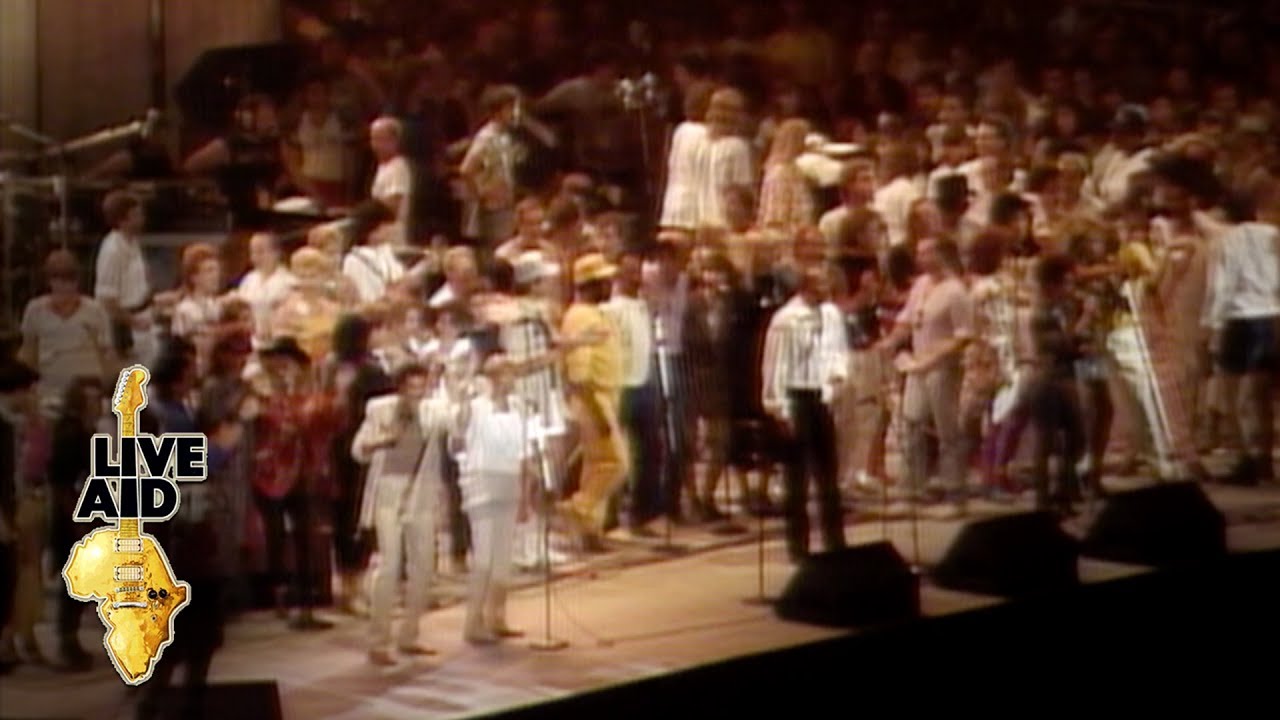
Being only 15, I asked mum who the “man with the big nose and curly hair” was.
“That’s Bob Dylan! He’s from the 60s.”
To say I looked nonplussed would be an understatement.
“He’s got a horrible voice”, offered I, saying nothing about his oily skin, terrible teeth and fragile demeanour.
Indeed, coming more than 18 months before his return with Graceland, I’m not even sure I would have known Paul Simon from Paul Simenon. Though, admittedly the contrast between the two Yankies was striking, and the little fella’s soft soothing silky sheen would be one of the things I would grow to love about listening to Simon & Garfunkel.
But that would have to wait, because in ’85 I’d only just started rewinding into the 70s with Bowie and Roxy, and anything before that seemed like another world.
Perhaps it was.
On a contemporaneous footnote regarding the two most obvious no-shows, the 90 minute programme reveals Huey Lewis got the line intended for Prince, as a cod-duet with Michael Jackson, with the Purple One’s offer of only playing a guitar solo in a separate room rejected.
Most annoyingly, the non-invitation of Madonna is disappointingly glossed over — but take it from me, it was politics. Hot on the heels of 1984’s Like A Virgin, La Ciccone was definitely Prince-level famous at the time, and yet, amazingly enough, she was not invited to sing on the recording, not even as part of the ensemble choir.
This didn’t sit well with Harriet Sternberg, who worked with industry bod Ken Kragen on assembling the project. “I wanted Madonna, but Ken wanted Cyndi [Lauper],” Sternberg says in the new doc. Basically, they had already ticked the box marked Squeaky Young Female by including Cyndi, and that was enough. Kragen was, hilariously, also managing several more fortunate acts, including the present and correct Kim Carnes and Kenny Rogers. Ah.
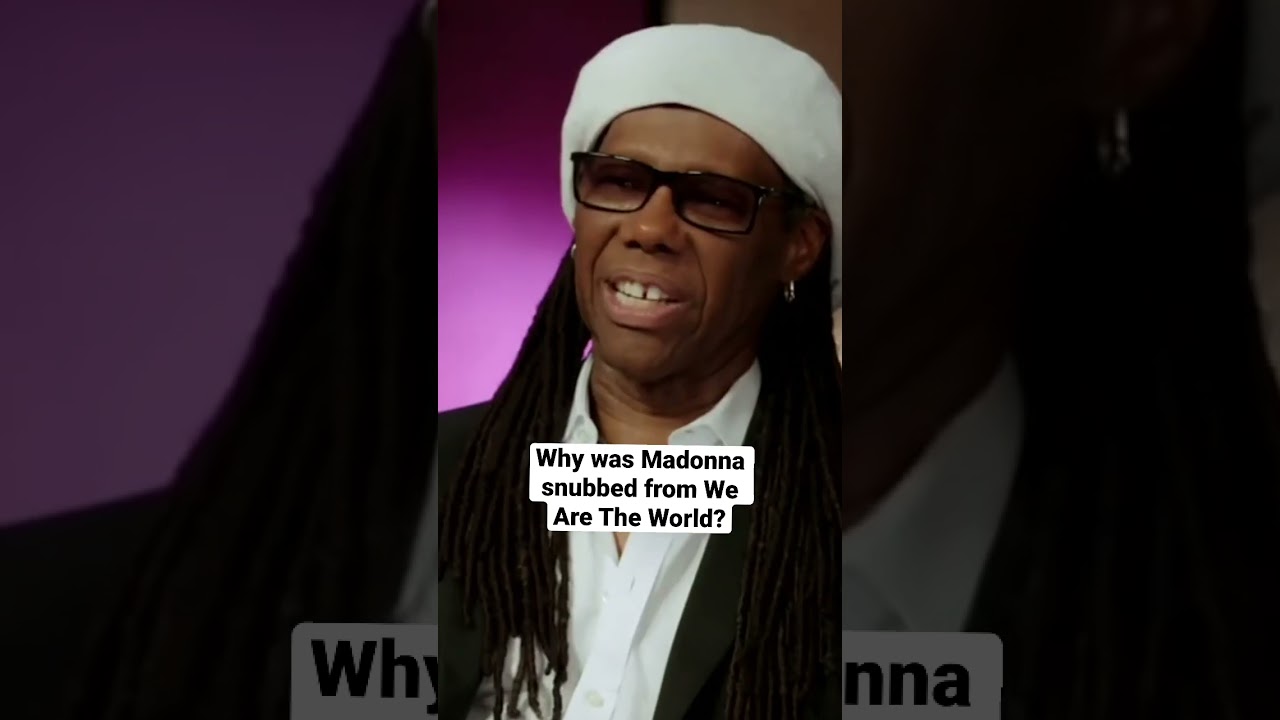
OK, she‘s about as likeable as Trump and Putin‘s love child but why would the team not want Madonna for star value? “Because they didn’t think she could sing,” said her then producer, Chic mainman Nile Rodgers in a recent interview. “It broke her heart.”
So there you have it. Years later, Richie conceded on CNN it was a mistake. “We had to have voices that people knew right away… you have to have an identifiable voice,” he said of the decision.
“And for whatever reason, Cyndi just had that.” Ouch. Apparently, poor Madge was still “incandescent” about her exclusion in July 1985, when she performed at Live Aid but, tellingly, opted not to join the finale to warble We Are the World.
I do, however, believe there’s a little more to it though. It’s well-known Michael Jackson didn’t like her — there’s a telling snap of the two of them backstage at a Jacksons Victory Tour show out there and he does nothing to hide his displeasure around her. Then again, it’s not that surprising when Motormouth Madge had already given early interviews to Record Mirror and the like where she claimed she’d already stood him and Quincy Jones up at some kind of dinner date.
Oh that Madonna eh, charmless to the day she dies. Though she got her own back – in the US at least, when Crazy For You knocked We Are The World off the top spot of the Billboard ‘Hot‘ 100 that May. Bwahaha.
Revenge is a dish best served positively Siberian, just like her.
Steve Pafford
BONUS BEATS
Good: Steve, Stevie, Ray, Huey, Kenny Rogers, Paul Simon, Kim Carnes, Diana, Dionne, Tina
Bad: Broooooce, Bob, Cyndi, Al Jarreau, James Ingram
So-So: MJ, Lionel Itchy


