

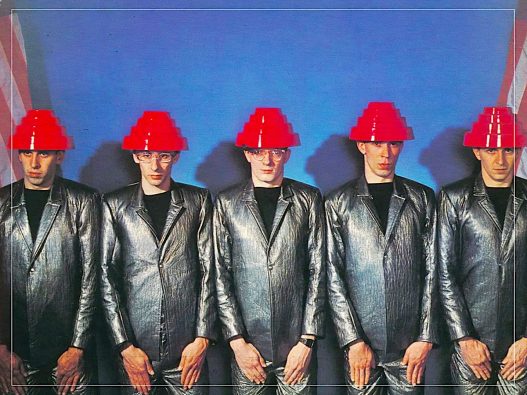

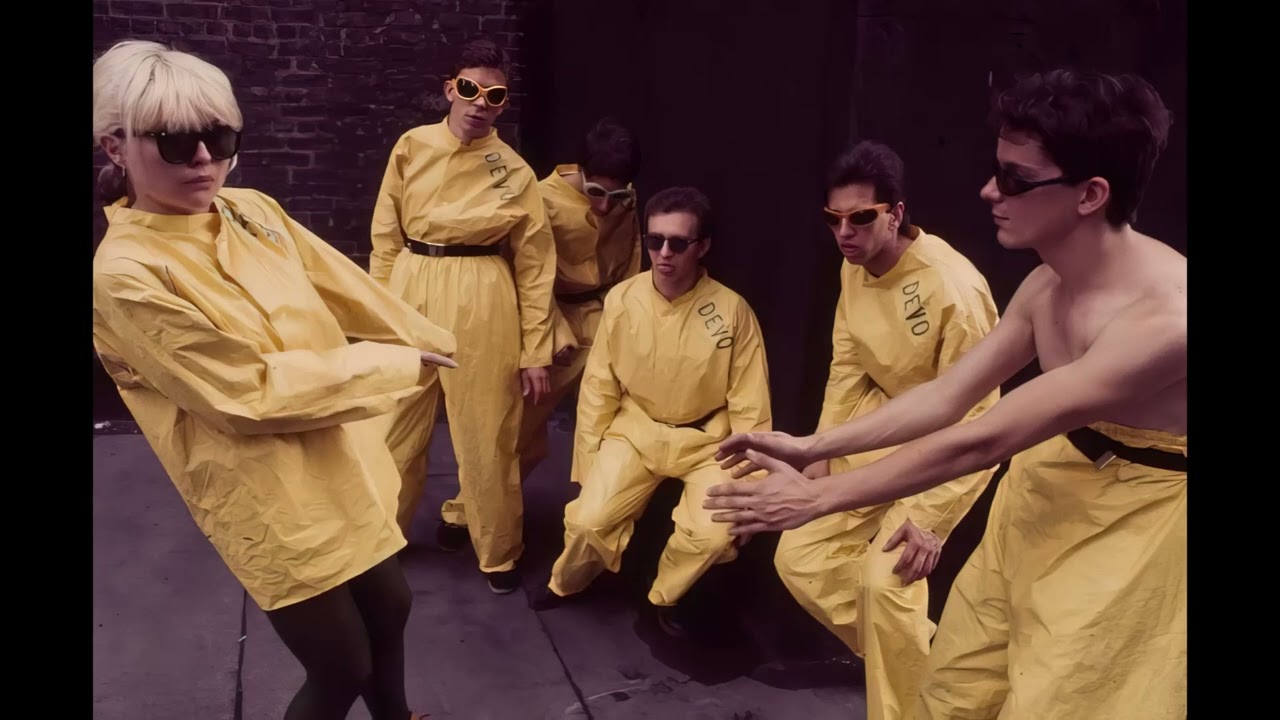
For half a century, delectable deviants Devo have confounded audiences, collaborated with A-listers and continued to twist and contort what contemporary music can be with their jumpsuited avant-absurdism, and its theory of de-evolution. Blondie and Talking Heads may have been easier on the ear, but few acts rode the A-train out of the East Coast’s 70s CBGB scene with the zany aplomb of these new wave weirdos.
This is the story of arguably their signature song. “Kerrrack that whip!”
Going sane in a crazy world is perhaps the best way to describe art school satirists Devo. Despite being covered by artists as varied as Nirvana and Rage Against The Machine, the self proclaimed five ‘spudboys’ have always been an A&R man’s worst nightmare, yet the Ohio combo have sculpted their own stubbornly pigeonhole-free quirk rock with singularly relentless conviction since their formation over 50 years ago. And did I mention that anyone who’s ever directed a music video owes them a serious debt of gratitude.
With their eponymous Chris Smith-directed documentary now showing on Netflix, it seems timely to consider how, with the possible exception of the great Pretender Chrissie Hynde — another city contemporary who knew the limitations of aligning yourself to one sonic tribe — Devo have now arguably overtaken the stinky smokestacking rubber industry as Akron’s most famous export.
In the film’s ‘zany’ trailer, head honcho Mark Mothersbaugh recounts how in 1978 the cult misfits asked their record label for cash to fund a promotional video for their bonkers bastardisation of the Stones’ (I Can’t Get Me No) Satisfaction. It’s easy to forget that with limited screen time available, music clips weren’t automatic common industry practice until the advent of MTV in 1981. Something of an unconventional throughline in Devo’s career, they proved to be ahead of the curve.
Remind you of anyone? The holy quadrumvirate of art rock — the high-powered father figures David Bowie, Iggy Pop, Brian Eno and Robert Fripp — were Devo devotees, too.
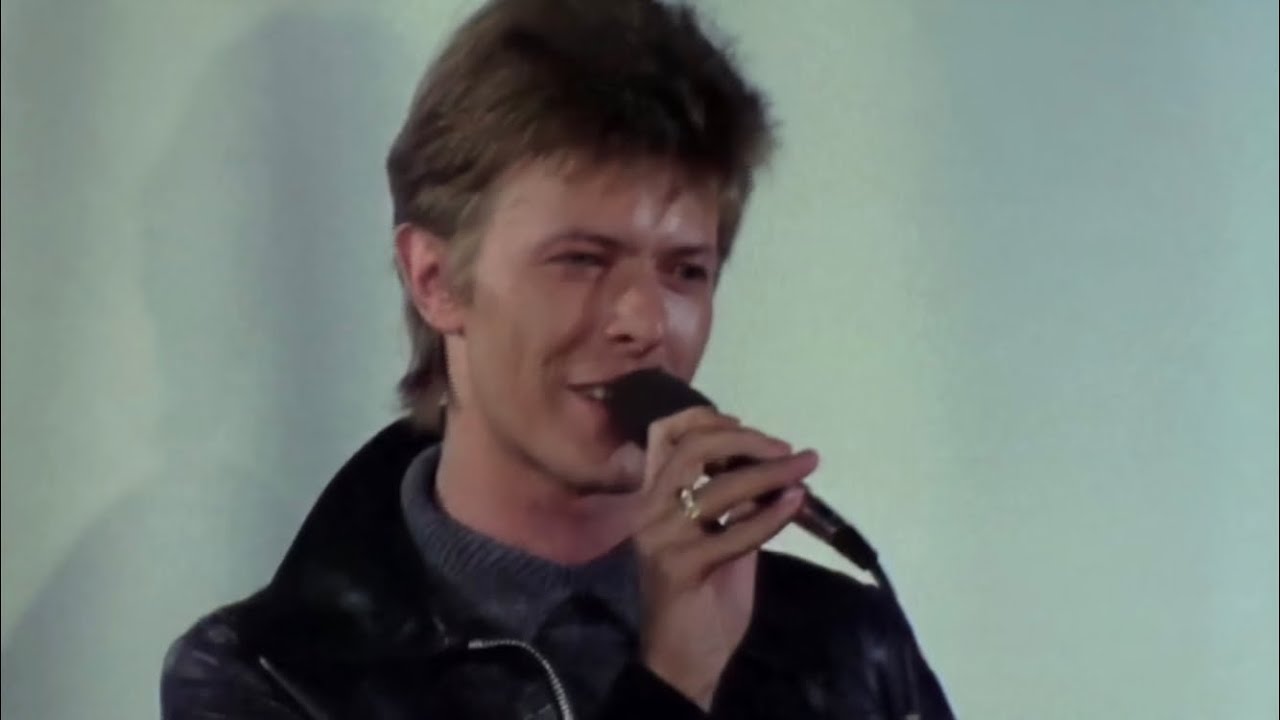
The docufilm even boasts fascinating footage of a November 1977 show at NYC’s Max’s Kansas City, where Bowie, in his “Heroes” leather jacket and comfy sweater, introduces them on stage as “the band of the future”, declaring he would be producing them in Tokyo soon. “We were sleeping in a van in front of the club that night,” recalls Mothersbaugh. “So it was like, yeah, we’ll gladly go to Japan.”
The brilliant adventure in the Far East never came to pass. To cut a very long story short: with the band still label-less, the Ker-ching White Duke got cold feet and declined to fund the sessions for what became the herky-jerky lo-fi debut Q: Are We Not Men? A: We Are Devo!, handing over financial and production responsibilities to his then collaborator Eno, who’d sold but a fraction of the records Bowie had.
The quirky quintet ended up working with the egghead at Conny Plank’s farm-cum-studio in between Bonn and Cologne, with the Dame present for some of the recordings (and rumoured to have remixed the entire record when the fivesome locked horns with Eno’s sonic tapestry), on days off from filming Just A Gigolo in Berlin. When bass-playing co-founder Gerald Casale missed the flight a mind-boggling supergroup formed in his absence. “Eno, Bowie, Dieter Moebius [of krautrockers Cluster] and [Can’s] Holger Czukay all jammed on Devo songs with us,” Mothersbaugh remembers. “Somewhere there’s a tape of that.”
Boosted by key 45 Jocko Homo, the debut LP unexpectedly found its way into the UK Top 20, but did little in the US. Transitioning via a sophomore set, 1979’s Duty Now For The Future (helmed by another Bowie collaborator, Ken Scott), Devo moved away from what Mothersbaugh terms their “pure art” phase, and embraced electronics more, smoothing their discordant edginess with a subversively accessible – albeit still pottily peculiar – pointed pop sound.

By 1980’s “make or break” third LP Freedom Of Choice the band cemented a sound and vision that would puncture the mainstream consciousness of America, which they did by settling into an effervescent groove, albeit in their own distinctly wacky and warped way, tempering their inveterate nonconformism with an unabashed ‘pop’ focus.
On to the eccentric earworm that is Whip It then. Issued in late August 1980, the LP’s second single was a Thomas Pynchon-inspired satire on meaningless capitalist slogans laced with an infectious pop hook, becoming an unexpected hit on the Billboard Hot 100, lapped up by the viewers of a then-fledgling cable TV. All further proof for the band of humanity’s De-Evolution, of course.
A co-production with Robert Margouleff (Stevie Wonder, Quincy Jones) at the Record Plant in Los Angeles, Whip It was an altogether funkier affair and typically ahead of its time. An irresistibly innuendo-laden romp that helped define a mid-80s sound years before everybody else realised the power of strange Reagan-ripping plastic hair hats and a firm embrace of your inner goofball.
With its krautrockish motorik beat, spidery electronic bass line, and suggestive whip cracks, Whip It is a peerless, provocative recording that builds into a torpor of frantic flashes as alarm-bell keyboard riffs buzz in the background, amping up the frenetic energy. The baiting biting lyrics are quite something too, cynically mocking how Americans often seem predisposed to resort to violence in order to overcome adversity or claw their way to the top. Peaking the month Reagan won his first term as US president what a shame ‘Ronnie’ didn’t think to use it for his campaign tune.
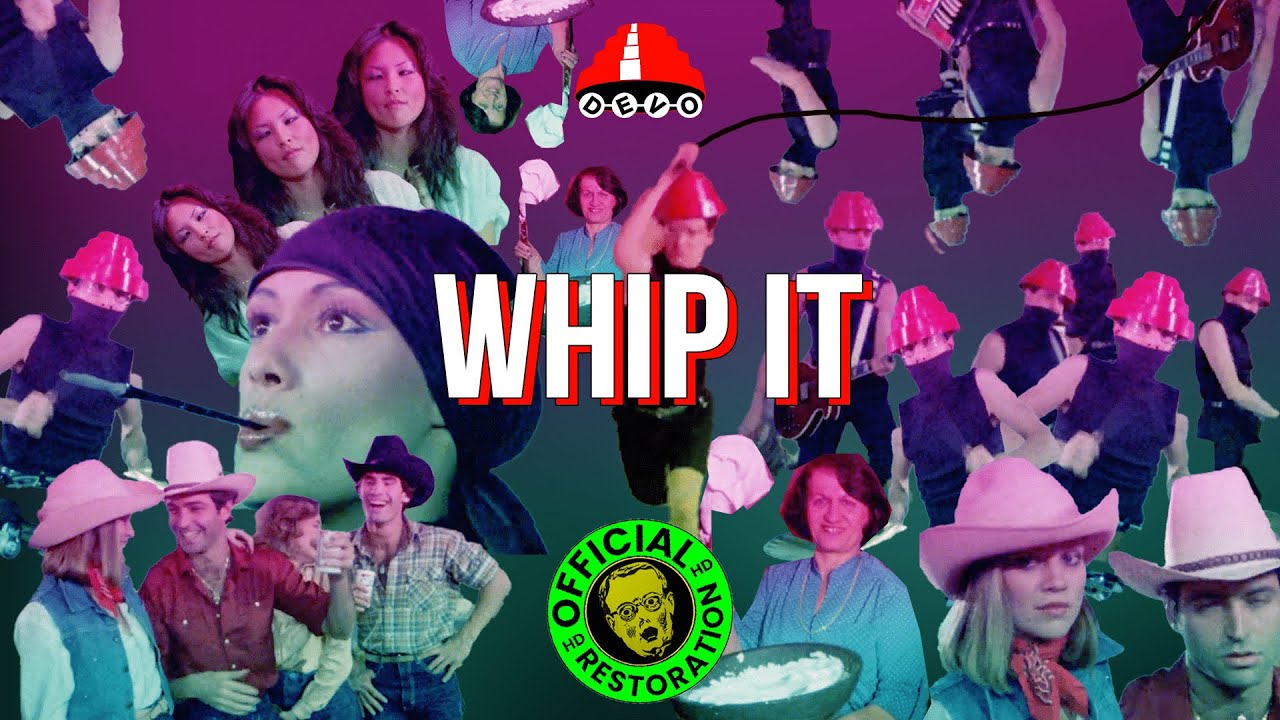
It’d be remiss if we didn’t mention the brilliantly bizarre video, too. With the fivesome donning red flowerpots as headgear and garbed in tight black turtlenecks while on the set of what looks like the world’s cheesiest amateur porno western, a splendidly geeky Mothersbaugh brandishes his whip like an alien sex fiend while Old Mother Reilly conjures up a bowl of Chantilly as the band perform in front of what looks like Utah’s Monument Valley as painted by Rolf Harris.
Although in retrospect it seems like their most obviously commercial track, Devo’s singularly sardonic band of art-rock wasn’t ever in danger of becoming mainstream. Yet somehow Whip It got enough support to rise to #14 in November 1980, though it stiffed in Britain at a lowly 51.
It’s for this very reason that Devo were pretty much unknown by my peers and I in their first run of eight albums. Not one Top 40 single or album followed the No. 12 feat of 1978’s debut, and although by the eighties I’d become interested in actually buying records (however belatedly) and was, by scanning the national music press, dimly aware of the band name as some distant wacky entity, what inspired me into surveying the band’s oeuvre was almost certainly a concert on 24 May 1990 in Birmingham of all places, because I’m sure they have them there too.
The performer(s)? Blondie’s Debbie Harry, who, with coruscating chutzpah, incorporated Whip It — and slightly more surprisingly, The Selecter’s jaunty deep cut Danger — into her set at a solo ‘Dirty Harry’ show at Aston Villa Sports Centre, with (get this) Underworld mainman Karl Hyde on guitar and support from a Scottish group called Goodbye Mr Mackenzie, featuring an overly bouncy dancing keyboardist: a young lass I have to admit, I told my companion I found “really annoying”.
That’ll be future Garbage glamourpuss Shirley Manson then, who has turned 60 this week. Oops!
None of this stagecraft honouring did Devo much good, mind. The band promptly split in 1991, though they were back like a flock of homing pigeons within five years.
And hell, they’re still ahead of their time.
Steve Pafford