

On 8 September 1980, Kate Bush aficionados were rushing down to the record shops (remember them?) to get their grubby mitts on her brand new album.
And buy they did, because when it shot straight to the top of the hit ‘parade’ the following week Never For Ever was instantly bestowed with a chart gong which may sound surprising in the 2020s but four and a half decades ago the singer’s third long-player became the first studio album (i.e. not a compilation) by any solo female artist to reach No. 1 in the UK.
Pivotal yet transitional and achingly romantic, it feels like a timely opportunity to publish our latest 33 at 45 feature then, written by deviant author Callum Pearce. It’s all you ever wanted.
“We must tell our hearts that it is ‘never for ever’, and be happy that it’s like that.” — KB.
Produced by the diamond dame herself, with assistance from Jon Kelly, Never For Ever was the second time Kate Bush took the reins in the production side of her work, the first being the obviously live EP from 1979, On Stage.
The autonomy was worth savouring, no matter how laborious the process: “It was the first step I’d really taken in controlling the sounds and being pleased with what was coming back,” she recalled.
Curiously, Never For Ever was the only Kate Bush album not to have a title track until the rejigs of later life set Director’s Cut in 2011. Its moniker responds to the themes of conflicting and deep emotions and stress, reminding the listener that these things are never forever and that we will move past them.
The other strong theme of the album is one that runs through a lot of Bush’s work. The deep pain and turmoil women can be left with, caused by the men in their lives; lovers, colleagues, or children. Unlike some tacky pop twats, these aren’t autobiographical songs banging on about a swiftly excommunicated lover. Instead, Kate as narrator mines a litany of literature and film to tell stories outside of her own experience and explore what connects each story and how the songs then fit together.
We’ll take a deeper look at some of the songs on the album, but before we do, I should mention the beautiful pencil illustration by Nick Price, which was voted the greatest cover art of 1980 by Record Mirror. It shows myriad monsters and animals pouring out from under her billowing dress, playing into the theme of good and bad things emerging from ourselves.
The Singles

The sequencing of the trio of singles from Never For Ever was impressionistic and imaginative, using a fittingly nightmarish pair of 45s bookending both sides of the bigger Babooshka to convey the horrors of war from a family POV, ie the grief of a mother who’d lost her soldier son in battle, and the unmitigated horrors of nuclear conflict from a perspective of an unborn baby.
Thus, the first N4E single was Breathing, which did fairly well, getting to 16 in the UK charts, the same position as the other war-torn turn, Army Dreamers. As Kate told Nationwide, Breathing told its story through the nascent mind of a foetus in a womb that is acutely conscious that a nuclear bomb has affected the world they’ve yet to be born into and is terrified of the fallout.
A haunting artefact of the late Cold War, the subject matter was an every day fear and obsession at the time; in fact, Raymond Briggs was probably already scribbling down ideas for his chillingly graphic novel that was published just over a year later. When The Wind Blows was a touching story about an aged couple trying to survive radiation sickness, and later made into possibly the best animated film ever, soundtracked by Roger Waters and David Bowie. There, I got my Dametastic reference in, no matter how slyly shoehorned it was.
Fun anecdote to lighten this tale: during the recording an EMI staffer heard the “out… in… out… in” refrain and thought Bush was doing a Donna Summer-style sexual song!

Forty-five years on, and the pop paranoia of Babooshka is still a stunning (second) single and the Bushiest bit of Bush you could ever hope to find. The singer explained that the femme fatale in the grimly ironic tale decides to test her husband’s loyalty by sending him “scented letters” from a young temptress, but he becomes so besotted with the fictitious creature she’s conjured up that their marriage falters beyond repair.
Nowadays, of course, there’s no need for that paper lark, they’d just get on Tinder.
The sound of breaking glass at the denouement was an early use of a sample made on the swanky new Fairlight CMI synth to which her prog chum Peter Gabriel had introduced her. At Abbey Road, Team Kate smashed a whole canteen of crockery and recorded the different timbres of each shattering cup and glass, just so they could feed in an arpeggio of breaking-shard samples.
In his Bush biography Under The Ivy, Graeme Thomson writes that the kitchen staff were so appalled, that the singer apparently grovelled for forgiveness with boxes of Belgian chocolates.

Ably assisted by a much-parodied video (Kate played the suspicious spouse, while the double bass symbolised the baited hubby), Babooshka swiftly became Kate’s biggest hit since Wuthering Heights and indeed of the eighties, only surpassed by 1985’s Running Up That Hill.
Infinitely memorable and one of her most recognisable songs, even if you’d actively avoided listening to her it’s almost certain that that tasty triumvirate will have registered on even the most cloth-eared of listeners. I can’t imagine that The Infant Kiss would have been quite as welcome on Top Of The Pops, although perhaps a few BBC DJs might have had a soft spot for it. But we’ll come to that one later.
The third and final single was the gorgeously melancholic Army Dreamers. A sublime slow waltz, it tells the story of a mother grieving for a son lost to war, racking her brain to work out what she could have done to prevent his pointless death.
With an unmistakable and resonant Irish lilt in her vocal (Kate’s mum Hannah was from the Emerald Isle), this was one of a few songs of Kate’s that received much belated attention in 2024 due to its use on TikTok, leading to a 1,300% increase in streams.
Literature and film inspiration

Shorn of its lyrical context, the side two opener The Infant Kiss can be a difficult listen. The music, as always, is stunning, but the subject matter is somewhat uncomfortable. The moving piano ballad is based on a 60s gothic horror flick that would spawn an Erasure album title, The Innocents.
Starring Deborah Kerr in arguably her most affecting role, the black and white film was in turn inspired by the Henry James’s Victorian novella The Turn Of The Screw regarding a governess struggling with her feelings for a young boy in her care.
In the story, the lad and his sister are possessed by spirits in the material world, making them both children and adults at the same time, while the song explores the conflicts of her more maternal and caring feelings for the young person and more adult feelings for the flirtatious grown man inside him that teases her.
“Just a kid and just at school
Back home, they’d call me dirty
His little hand is on my heart
He’s got me where it hurts me
Knock, knock. Who’s there in this baby?
You know how to work me…”
The video featured here is a fan-made video from Chris Williams. With her typical generosity of spirit, Kate later contacted the creator to compliment him on the clip, confusing that he’d picked the exact right scenes that she was thinking of when writing the song.
Incidentally, there are two vocal versions, with a French-language redo, Un baiser d’enfant, appearing as the B-side of the one-off 45 Ne t’enfuis pas in 1983.
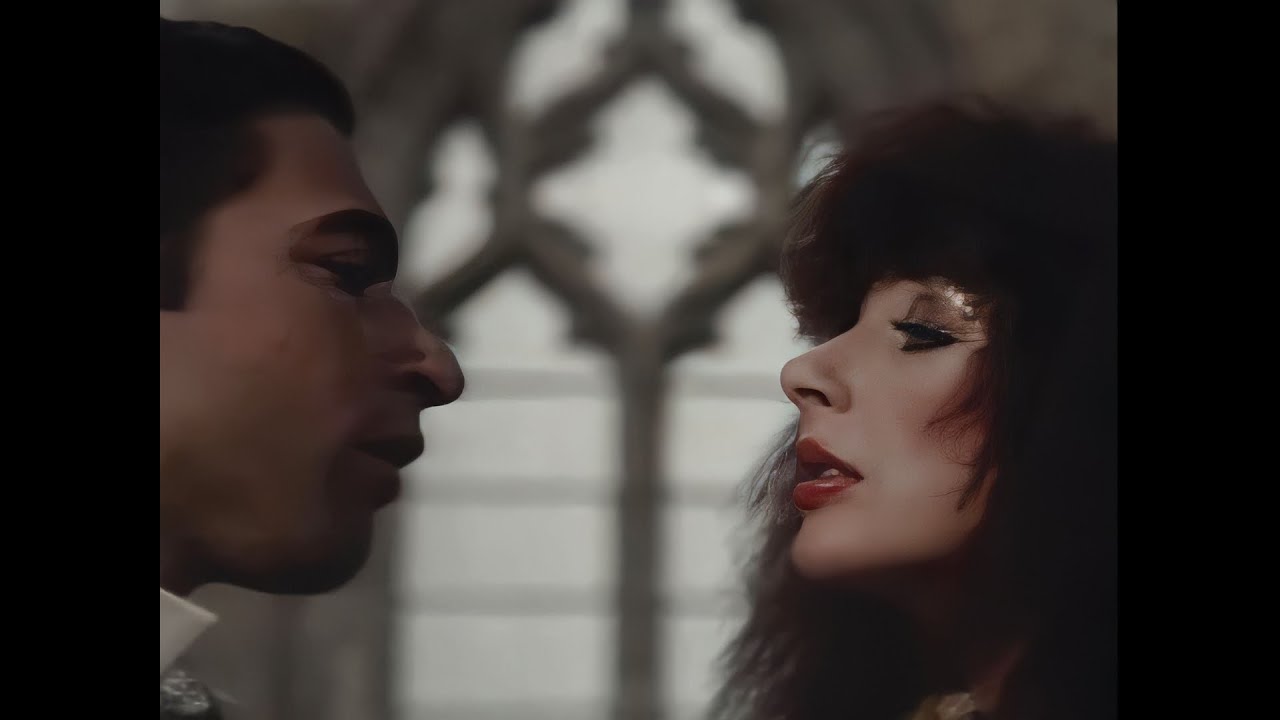
With its subtitle inspired by a 1968 episode of Omnibus directed by Ken Russell, Delius (Song Of Summer) “is a tribute to an extraordinary man both in body and spirit,” relayed a contemporaneous Kate Bush Club Newsletter. The titular chap being English composer Frederick Delius, of course.
With its softly shimmering soundscape, Delius is a dreamy and capacious panorama, and weirdly, in a lyrical way it reminds me of Dali by the Spanish combo Mecano. Just picking out aspects of his character and life story, sometimes just keywords and letting them sit with you. They’re not hugely similar aside from that aspect, just both being gorgeous songs about complicated but brilliant people.
The Wedding List was inspired by a François Truffaut film, The Bride Wore Black, narrated by the newlywed whose groom who was shot dead by a murder squad on their wedding day.
Musically owing more to the heightened am-dram elements of Kate’s first two albums, the song is fabulously vengeful. “Flooded with doom”, the raging widow declares “an eye for an eye” as she goes on a gangland hunt, plotting to kill all of the five men who blew away her hubby. In other words, she puts them “on the wedding list.”
The Tour Of Life

Both Violin and Egypt managed to sneak out early, being performed on 1979’s so-called Tour Of Life (the only tour of her life, in fact). Violin is musically and vocally a total nervous breakdown of a song that is great to turn up loud enough to rattle the windows and just get lost in.
With its haunting evocative exotica, Egypt was described by Kate as “an attempted audial animation of the romantic and realistic visions of a country,” exploring the wailing of ideas we have of sand and pyramids that turn our eyes away from the problems there.
Blow Away (For Bill) was dedicated to Bill Duffield, the lighting director for said Lionheart tour, who sadly died following an accident at the warm-up venue in Poole.
Said Kate: “Blow Away is a comfort for the fear of dying and for those of us who believe that music is perhaps an exception to the Never For Ever rule.”
Last But Not Least

A deceptively simple tune but with lyrics more opaque than much of Bush’s oeuvre, All We Ever Look For deals with the hassle and trauma that trickles down from our parents — the things in them that come out in us and their expectations for us. It’s also about looking in all the wrong places for the wrong things and never quite satisfying whatever it is you crave.
Finally, Night Scented Stock is a stark, wordless interlude used used as a lead-in to Army Dreamers. Consisting entirely of layered vocals that sort of sound like Gregorian chants crossed with 10cc’s I’m Not In Love, it’s a lovely little wonder.
While Bush’s earlier albums are full of eccentric idiosyncrasies, these songs offer a fuller glimpse of the pop pioneer who’d make The Dreaming, Hounds Of Love and the rest: not just a wildly creative songwriter, but an intrepid explorer and studio perfectionist to boot.
Never For ever proved to be a critical and commercial success and one that its creator apparently considers one of her favourites, even if — I can’t fail to add — she refused to play a single note from it in her 2014 stage show Before The Dawn.
It’s the start of one woman’s work and her transformation into a one-of-a-kind auteur, the record that made those later, greater glories possible. A slightly psychedelic progressive trip into a truly unique mind with a wonderfully wayward soundtrack that shows Kate Bush’s titanic talent and her magpie nature of absorbing stories, characters and musical/vocal techniques from an eclectic panoply and bringing them together in a stunning piece of art that still sounds special 45 years later.