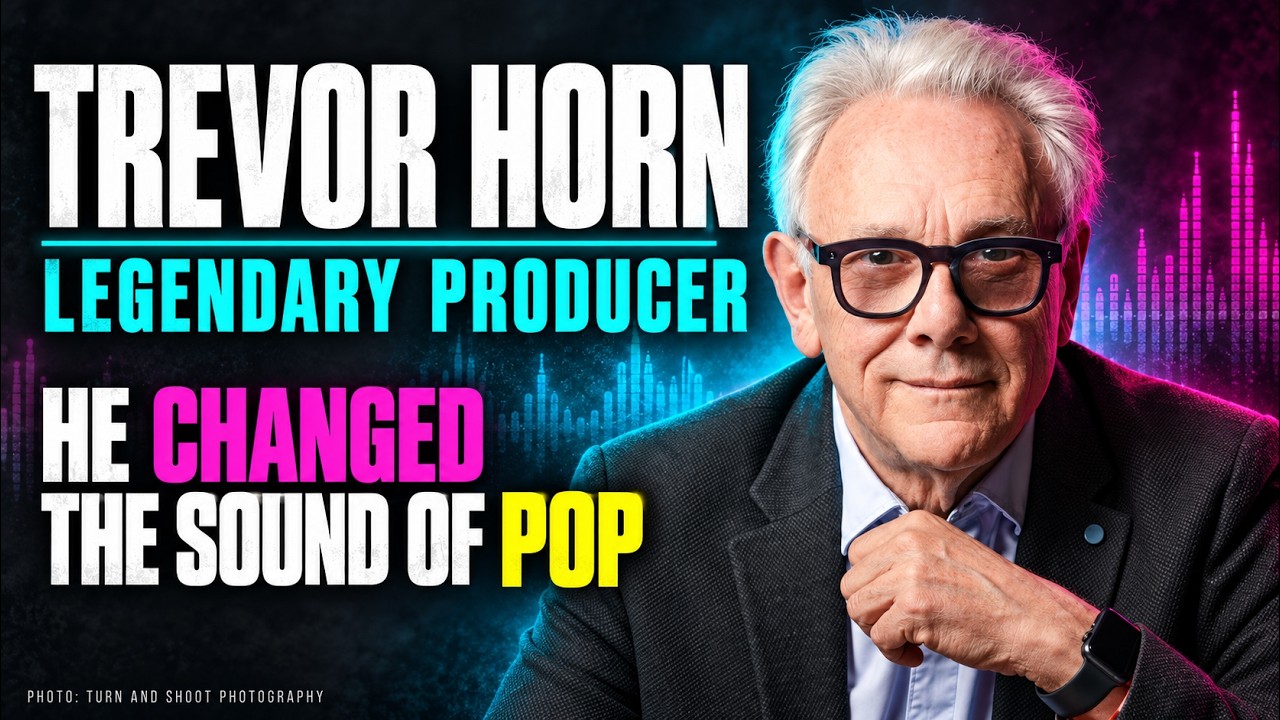


With a rollcall of credits including ABC, Yes, and Grace Jones it goes without saying that Trevor Charles Horn’s impact as a song stylist and production powerhouse in the 1980s was as astonishing as it was audacious.
Moreover, with his epochal everything-and-the-kitchen-sink audio productions uniformly praised for their high fidelity sonics and obsessive attention to detail, the bespectacled chap from County Durham who defined the sound of an entire decade can verifiably lay claim to have been a major influence on subsequent eras and generations to boot.
Talking of leathered foot fetishists, Marc Almond — a veteran of that most poptastic of periods, but, as we shall discover, worked with Horn in a future love sounds decade — suggests that “every record he makes is a pop opera with his inimitable stamp on it.”
Clever Trevor himself mused that “I started fixing people’s songs up, and then I started to think, ‘I’m fixing people’s souls up.’”
Whilst this feels like a typically grandiose statement befitting a major player in modern media, the impressive list of artists this most prescient of producers has worked with across six superlative decades reads like a who’s who of mega pop somebodies. And the sheer number of repeat collaborators suggests he must be doing something right in that often mercurial department.
Following on from Steve Pafford’s initial listicle ‘Perfect 10: Produced by Trevor Horn’ in 2023, Catherine Walters has opted to show that the über-lord of Wagnerian white disco was acceptable beyond the 80s as we chart the artist of noise from the nineties through to the 2010s, kicking off with the club’s favourite singer the studio whizzman has worked most consistently with over the past three decades.
Seal — Crazy (1990)
![Seal - Crazy (Official Music Video) [HD]](https://stevepafford.com/core/cache/flying-press/8a1386291a7159cc40d6967caf6846a9.jpg)
Ever the Hornbag, Trevor claims that the first time the man born Seal Henry Olusegun Olumide Adeola Samuel sang to him he, and I quote, got “a musical hard on”. In fact, the relationship between the two men is clearly mutually appreciative with the singer regarding his long-term producer as an “industry great” who inspires him “each and every day”. While the older knob-twiddler was equally effusive proclaiming him a remarkable talent: “I had some great times working with Seal. I think his debut still stands up, it’s a really good album.”
After arriving at chart success with his honeyed pillow soft vocals on Adamski’s coruscating Killer, the pinniped mammalian signed to Trevor’s ZTT Records and released his first eponymously titled set with his label boss taking on production duties, just as he had done with 80s protégés Frankie Goes To Hollywood. The sessions marked a turning point in Horn’s opulent production method, swapping the usual roomfuls of studio hardware for a bank of computers.
Seal’s first and still most successful solo single, Crazy, was created over the course of a couple of months, with the vocalist confident it had the potential to reach No. 1. In the end it had to settle for silver, being denied pole position by Enigma’s ubiquitous Sadeness Part 1 in January of ’91.
With his signature opulence, Trevor recalls a sumptuous session mixing Crazy “in a mansion in Los Angeles now owned by George Clooney. Jill [Sinclair, his wife and manager] wanted me to mix Seal really loud.”
“In fact, he is absolutely bone dry; there isn’t an effect on him. He’s also flat — there’s no EQ on him, while the whole track is compressed around him. That’s a technique we use a lot. We very rarely put on any EQ, and try to keep the whole thing digital from the minute he sings until it ends up on the CD.”
Seal shot straight into the top spot in the UK, going on to win a Brit Award for Best British Album, and was swiftly followed by the even more imaginatively titled Seal — or Seal II as it became colloquially known. Both sets appeared on ZTT, but by the third, Human Being, he’d shifted to Warner Bros., although he took his go-to producer with him.
A proposed fourth opus, Togetherland, was scrapped because either Seal or the label thought it wasn’t good enough. Henry Jackman, who’s generally more famous for his movie compositions, was feted to produce, but when the album was aborted he went back to his original collaborator for the, can you tell what it’s called yet?, imaginatively entitled Seal IV.
In fact, in preparation for this feature I had a quick count, and of Seal’s ten studio albums four contained his name in the title and two were amusingly similar (Soul and Soul 2), while all except Human Being start with the letter S. Of those 10, Trevor Horn is credited as producer on half a dozen. Talking of Numbers, here’s the six dwarf.
Marc Almond — My Hand Over My Heart (1991)

Following on from a springtime solo and Soft Cell catch-up called Memorabilia – The Singles, Marc Almond’s album of autumn ’91 was also a game of two halves: the first side of his seventh studio set Tenement Symphony being subtitled Grit, and the sparklier second Horn-helmed side, was named Glitter.
All three singles were extracted from the Horn half: Jacky (a high-octane Jacques Brel redo), My Hand Over My Heart and The Days Of Pearly Spencer, Marc’s second and most recent solo Top 10 hit in Blighty. Whilst Hand was the least successful of the trio, reaching a lowly 33, it’s a marvellously under-rated 45 which Almond penned with his Cell mate Dave Ball. Fusing a sumptuous swirling orchestra with impassioned vocals and an almost angelic backing, it’s certainly a different direction from the sex dwarf Northerner’s usual torchy output. Hail the Horn then:
“Jacky was a great track. But I prefer The Days Of Pearly Spencer. Apart from that beautiful arrangement and the way the French horns come in at the end I’ve always loved the way we changed the song with that little bit of Debussy. The circumstances were fine until I got the finished album, that’s what made me annoyed. I didn’t want to work with him again because I’d busted a gut on Tenement Symphony and he put that on the second side. I didn’t like the rest of the record. I thought ‘people will have to get through eight duff tracks to get to my tune!’.”
Alas, the wee pair did eventually team up again in 2023 on the producer’s project Echoes: Ancient & Modern. Featuring nothing but covers by mainly previous collaborators, Marc performed a gorgeous gender-swap cover of Pat Benatar’s rock chick classic Love Is A Battlefield. At least it wasn’t a stomach-churning attempt at Elvis Costello’s Pump It Up.
The Pretenders — I’m Not In Love (1993)

Trevor is on record as opining that “I thought the best produced song ever was I’m Not In Love by 10cc, where the production really made the song.” His reverence for 1975’s semi-a cappella chart-topper seems to be borne out by its addition to his live setlist in the last decade, with vocals by Seal and then Matt Cardle, and more recently with Steve Hogarth from Aylesbury progcombo Marillion.
The Pretenders’ remake of the moody ballad was released as part of the Indecent Proposal soundtrack, with the video featuring clips of Chrissie Hynde interspersed with scenes from the movie.
For the original 10cc version three of the band members multitracked their voices multiple times to achieve the layered choir effect on the final record, whereas here we just have Hynde’s solo vocal in all its aching vulnerability highlighted by the stripped back guitar-based arrangement.
Trevor was to work with the Pretenders again on two tracks for another Demi Moore film OST, this time her turn as G.I. Jane. The pretty pair, Homecoming and Goodbye, were also included on a 2015 deluxe edition of the band’s Fin de siècle album ¡Viva El Amor! in 1999.
Tom Jones — If I Only Knew (1994)
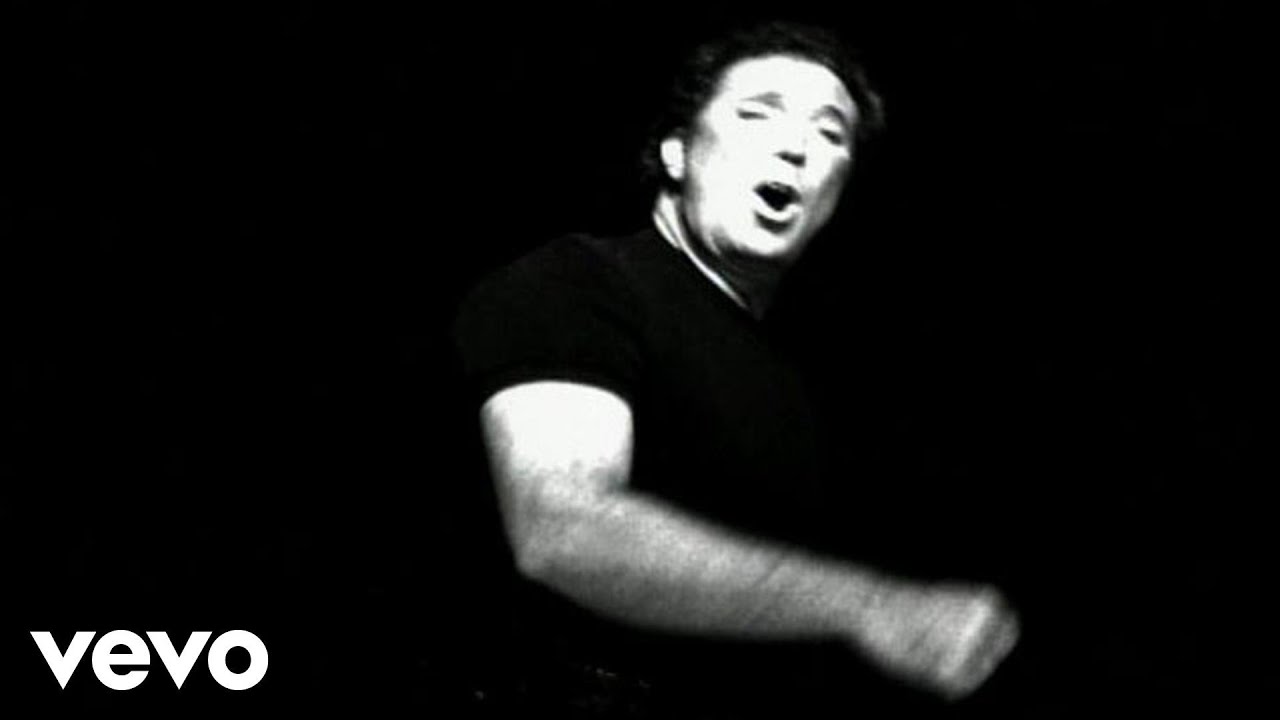
The 90s heralded an expansion of the oeuvre, with Trevor laying down a plethora of productions for veteran dad vocalists. David Bowie declined* but those who did say yay included Paul McCartney, Rod Stewart, Mike Oldfield, Bryan Ferry and the large-lunged legend that is Tom Jones. Horn helmed the lead single from his 33rd studio album The Lead And How To Swing It, which kickstarted a resurgence in the Welsh wonder’s career, culminating in 1999’s trendy duets set Reload.
This particular LP from ’94 featured team-ups with Tori Amos, Jeff Lynne and (gasp) a reworking of Yazoo’s seminal Situation, as well as a major update in the crooner’s musical sensibilities, in large part due to contemporary electronic sonics as provided by Horn, Flood and Youth. AllMusic’s Stephen Thomas Erlewine was distinctly unimpressed, however, complaining that “it’s a set of written-to-order dance numbers immaculately produced and sung, yet hardly engaging”, as well as taking a swipe at the “clumsily” crafted title. I’d personally add the awful string-vested cover ‘art’ while we’re at it.
Kicking off with a rising synthy staccato refrain and a histrionically looped “yeah!” scream that goes on for days, If Only’s frenetic musical melange takes in soul, dance, rap and rock, though it can sometimes overshadow the boy from the nowhere Valleys, leaving it feeling a tad garbled. But with his delectable dynamic diaphragm Sir Thomas has the power to overcome such trifling matters, making this his last ‘solo’ Top 20 hit in his homeland to date.
Tina Turner — In Your Wildest Dreams (1996)
From one powerhouse set of pipes to another. In ’96 Trevor produced over half of what would become Tina Turner’s penultimate studio set Wildest Dreams. Boasting a sea of disparate talents such as Sting, Arthur Baker and Pet Shop Boys, the multi-platinum LP spawned six 45s, starting with the brilliant Bond theme GoldenEye in 1995 and ending with the shuffling funk groove of its pseudo title track, which charted into 1997.
On non-US album pressings In Your Wildest Dreams featured Antonio Banderas on additional vocal duties in breathy, sultry Spanish and English. However, for the American rejig and single release, the Iberian stud was replaced by the Walrus of Love himself Barry White, adding a richer and growlingly soulful feel to the affair. He was feeling sensual!
Having said that, anyone who has heard Banderas’s version of Bella Maria De Mi Alma, from the Mambo Kings soundtrack, knows the man has a beautifully sexy voice and makes the affair less walrus-y than the eggman. But I digress.
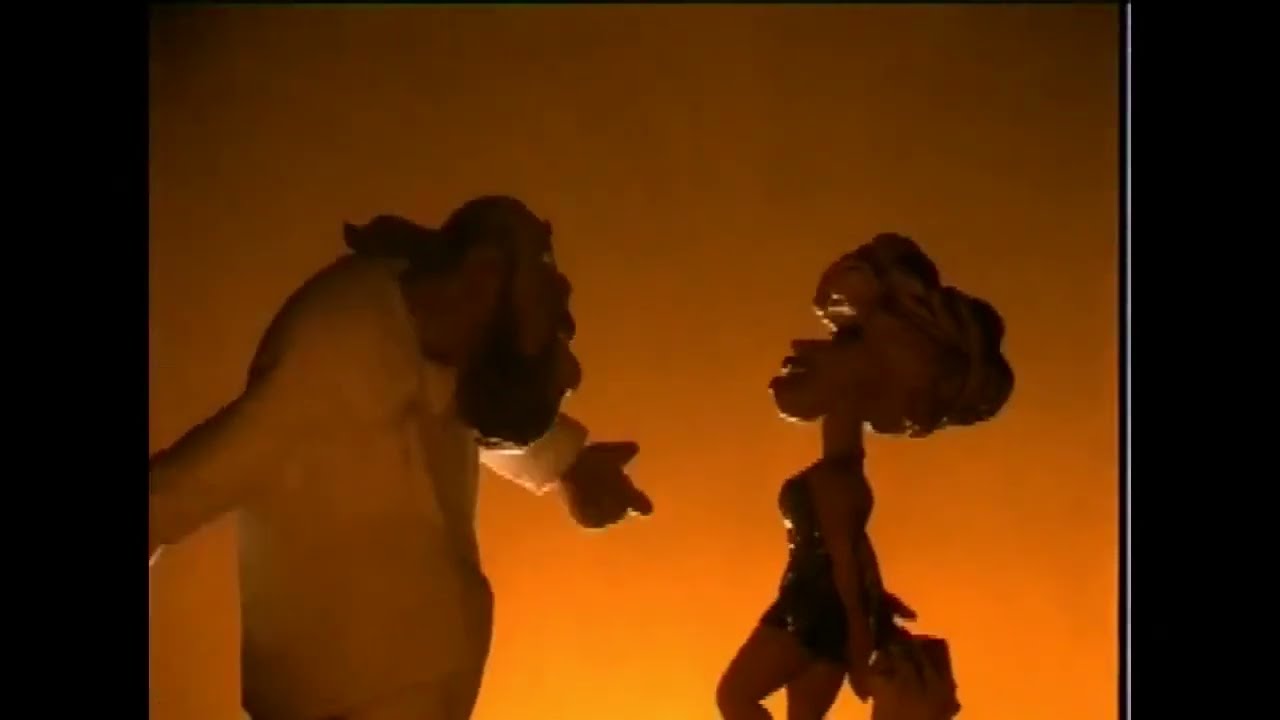
Created by Nick Park and Aardman Animation, the promo clip featured claymation figures of Turner and White. It comes and goes on the websphere, and so far in an unofficial capacity because, rumour has it, Barry hated the video because he thought it made fun of his weight.
With its limited campaign, the song would become the least successful of the LP’s sextet of singles. In some ways that’s surprising when it was authored by Holly Knight and former Blondie producer Mike Chapman — a feted writing team famous for soft rock classics like (Simply) The Best and the aforementioned Love Is A Battlefield, covered by Marc Almond and produced by the Horn himself. It’s all coming full circle to me now.
Genesis — The Carpet Crawlers 1999 (1999)
The Carpet Crawlers first appeared in 1974 on the album The Lamb Lies Down On Broadway, by prog dogs Genesis. It had an unusual, er, genesis with Peter Gabriel crafting the lyrics then, legend has it, spending “hours and hours” on an out of tune piano at his in-laws’ Kensington pile trying to develop a piece of music composed by Tony Banks, Mike Rutherford and the rest of the band. The frontman argued that as author of the narrative concept he should solely be responsible for the words, which was in marked contrast to the Charterhouse quintet’s usual habit of sharing credits between all members.
The lyrics do feel typically Gabriel-esque opaque and obtuse with posited theories ranging from Gnosticism and the religious concept of Hell, to birth and death, or just the biology of sex. However, the album artwork suggests it’s just the chapter where a leather-clad, half-Puerto Rican delinquent named Rael, who Peter portrayed on stage, meets some monks.
In 1999, PG tapped TH to oversee a re-recording at his Real World studios near Bath, chiefly because the Buggle hadn’t worked with any of the line-up, past or present, so was viewed as a neutral presence.
The update focuses more on rhythm than the Lamb cut — added oomph you might say — and boasted not only evocative shared vocals from Gabriel and Collins (the third verse about a porcelain mannequin was excised when their contemporaneous replacement Ray Wilson was given the heave-ho) but even Steve Hackett returned to lay down some low-in-the-mix Police-like guitar chords.
The digital end-of-the-millennium production may feel a trifle cold and clinical, but as keyboardist Banks points out:
“The reason we got Trevor Horn on board was because we thought we’d all argue with each other. So we said, ‘do what you want with it’, really. I thought what he did was pretty good. I wasn’t too sure about the little drum loop he used all the way through, but the way Phil’s voice took over from Pete’s was just an amazing moment. It was nice working with Trevor; I’m an admirer of his. He’s a talented chap, so it was fun to have done that.”
The remake would act as a one-off five-member homecoming, though in the end only four made it to Wiltshire, not Phil Collins: “I had to go to Switzerland to record him.”
There was also a nice circularity to the reunion, too, as not only was the original Carpet Crawlers the last Genesis single with Gabriel as frontman but the CC99 redo marked the last time the band recorded in the studio in any configuration, acting as their farewell 45 to promote the compilation Turn It On Again: The Hits.
t.A.T.u — All The Things She Said (2002)
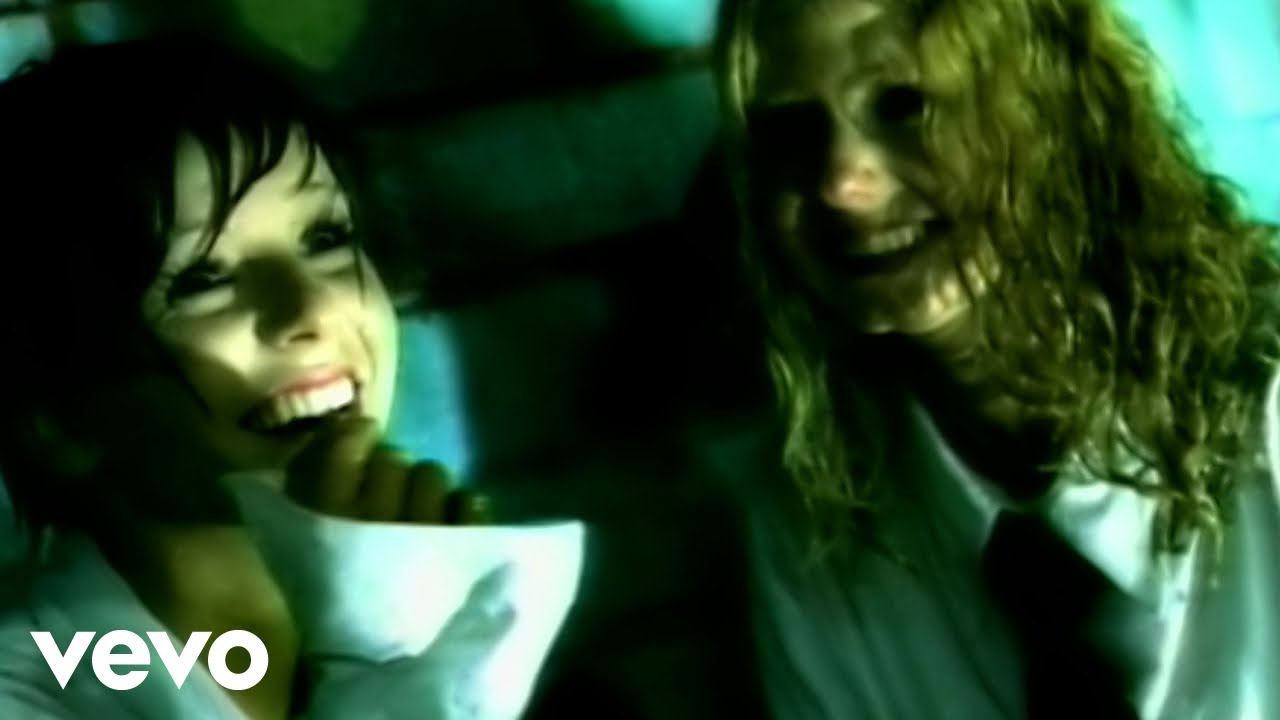
A new century and a new approach. In 2002, Trevor went east and rebooted a Russian chart-topper into an even bigger international hit for Lena Katina and Julia Volkova, from their first English-language album 200 km/h In The Wrong Lane. The collab came about when Interscope’s Head of Marketing played Horn the Russian versions of Not Gonna Get Us and All The Things She Said and asked if they could be remade for crossover appeal.
“I thought I was gonna get the multitrack from the Russian version but they wouldn’t give it to me, so I had to completely remake the record with engineer Rob Orton, the guy who mixes Lady Gaga. I had a tiny budget, and had to play all the instruments myself. Writing the lyric for that song was one of the most difficult things I ever had to do.
“We used a tiny sample of the Russian record, squashed two loops together and it gave it a real good feel. They were nice girls but they could hardly speak English. They weren’t 14 years old, they were 18 or 19; my daughters’ age. Would it have been No. 1 in 20-odd countries if it still had that titillating aspect to it? It was actually a good record. They both could play the piano quite brilliantly.”
If you’ve ever wondered, the act’s name t.A.T.u. is a contraction of the phrase “Та любит ту” (ta lyubit tu), meaning “This [girl] loves that [girl]”, hence the attendant video deliberately designed to elicit an outraged response, featuring pair dressed as kissing schoolgirls. This led to it being banned from ITV’s CD:UK, with Ant and Dec memorably announcing live on air that “it’s not really suitable for children.”
However, the pair later admitted that their stage-managed image as underage lesbian Lolitas had all been a fake news marketing ploy, which bothered Trevor not a jot.
“The lesbian thing, they told me, ‘we’re not really career lesbians’. The whole thing about the original was about two girls that had a crush on each other and didn’t know whether they wanted to act on it. So I wrote it like that. That’s what it was about.”
Belle & Sebastian — I’m A Cuckoo (2003)

For some, Glaswegian gangly goon squad Belle & Sebastian are too baroque to be pop, too twee to be indie cool, or just too annoyingly wet to be listened to at all. For others, they are the ultimate soundtrack to a closeted life of social awkwardness and Smiths-like bedsit angst.
Horn became something of a fan of the Scots stalwarts through his daughter Ali, which resulted in the invitation to oversee their sixth studio album Dear Catastrophe Waitress. Though not the obvious choice due to the juxtaposition between the acoustic nature of the band’s raw, pared-down sound and Trevor’s exalted reputation for extravagance, the fruits of the collaboration seemed mutually appreciative.
“When I met them we all seemed to like each other so we did a dummy run on the album up in Glasgow, recording the whole album in a day, straight into the computer. I wanted to get a feeling for what it would be like. I really enjoyed making that record, and I do think it came out really well — people always associate me with big whizz-bangy things, but actually that was a completely different kind of job. More like old-style record production. And they’re lovely people.”
A comparatively lush, orchestrated affair, there was a more laidback West Coast groove than is usually found in a Horn production. Upping the summery quota, Aussie pop duo the Avalanches livened things up with their remix of the set’s second single, the breezy Thin Lizzy-aping I’m A Cuckoo. Famous for their frenetic plunderphonics approach, creating music entirely through samples, the Antipodeans’ overhaul added a high woodwind and accordion motif throughout. It may have alienated the most fervent B&S acolytes but it was rapturously received by many more, and bagged the Caledonians their biggest hit to date.
Pet Shop Boys — Integral (2007)
Trevor first worked with Pet Shop Boys on 1988’s legendary Left To My Own Devices and helped define what we now think of as the seminal synth duo’s signature sound: upmarket operatics, grand orchestra and pulsating dance music. In other words, “Che Guevara and Debussy to a disco beat”, to coin that infamous phrase once suggested by Horn himself.
The album that both sides always promised themselves they’d make, Horn took the helm of Neil Tennant and Chris Lowe’s ninth studio set, 2006’s Fundamental. After some last-minute editing and resequencing, the same May month the LP finally made it to the record shops (remember them?), that Buggles bloke also featured as musical director for a one-off PSB at the BBC concert and produced the subsequent live souvenir of the show, Concrete, featuring as it does a wealth of guest musicians including Rufus Wainwright, Stephen Lipson and Lol Creme.
The subject matter of Integral, Fundamental’s coruscating closer, was inspired by the Blair government’s Identity Cards Act. A proposed rollout which apparently raised Ver Boys’ hackles so much, slightly bafflingly (they have them in civilised countries too, such as Germany, where the duo would later purchase a property), that, in a fit of pique, fellow North-Easterner Tennant promptly ended his card-carrying support of the Labour Party. Not only a danger towards champagne socialism but red flags everywhere then.
An eclectic melange, with a little Ladytron here, a touch of Michael Zager meets Midnight Oil at the Black Box Recorder there, Integral is Boystown reimagined by Albert Speer in Narnia. And it’s all wrapped up in an icy sea of orchestral strikes and string flourishes that PSB + Horn do better than anybody. Factor in a big creamy dollop of dry English sarcasm and you’ve got yourself a typically classic if slightly angry Pet Shop Boys tune.
Radically restructured and released as a digital single to plug 2007’s sideline series set Disco 4: Remixed By Pet Shop Boys, the powerful urgency was replaced by an even icier and sinister if slightly forced vibe; its jerky stop-start arrangement complete with robo-vocoder overload giving the impression it doesn’t quite know what to do with itself.
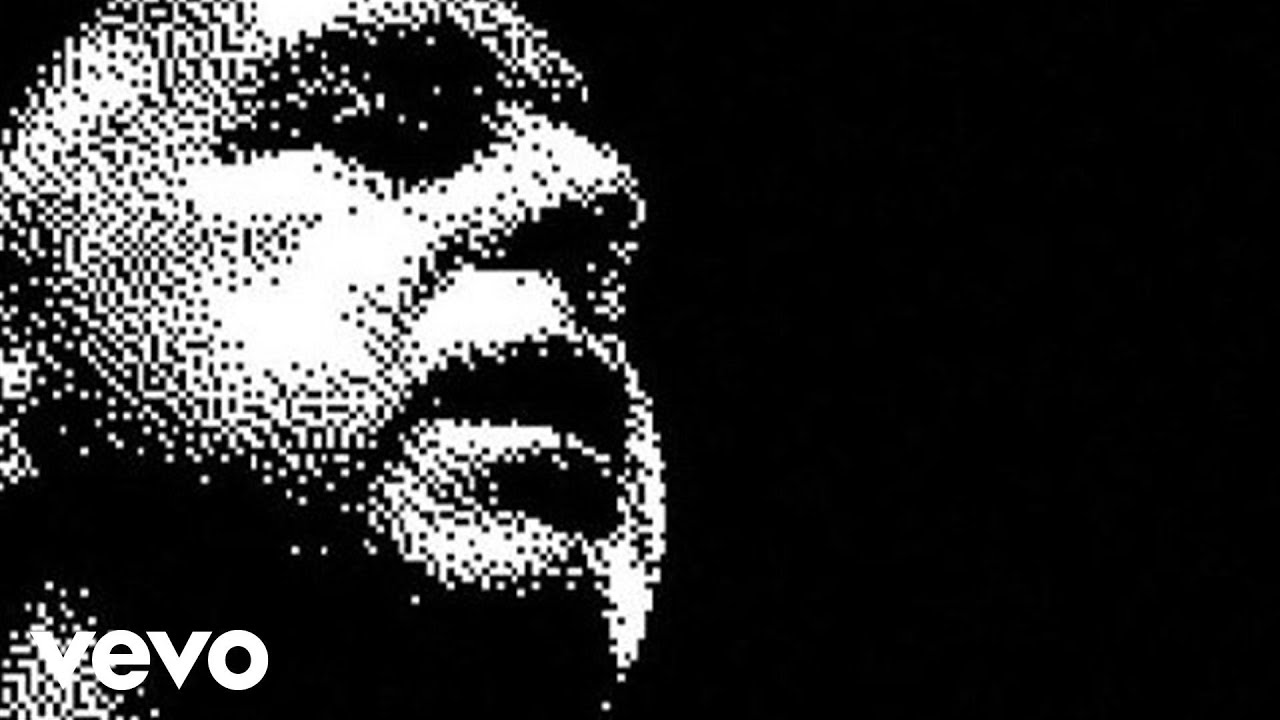
The accompanying video, made by pixellated production specialists The Rumpus Room, was an immersive treat, though. Featuring Big Brother’s view of London interspersed with grainy surveillance footage of the duo, QR codes and culminating with members of an invited public flashing past at lightning speed while displaying random identity imagery.
The Orwellian imagery swells and myriad eyes flash past on pixel paper, all in front of — how apt — the MI6 building on the Thames. Tennant passes sporadically through the pixels. His face revolves, with rays of light passing over it like one of those evil eye scanners one might use to make one of the big bad identity card things that the song chillingly describes.
Not only that, if you freeze frame the film at exactly the right moments (and trust me I have; it’s infinitely tricky) you can spot a familiar face, who, very appropriately, cut short a visit to the Basque Country’s Bilbao — scene of the pre-credit title sequence of the 007 film The World Is Not Enough — to lend his “distinctive physique” to the project, as shot at the American International Church in London’s West End, girls and boys. Isn’t that right Steve Pafford?
Robbie Williams & Gary Barlow — Shame (2010)
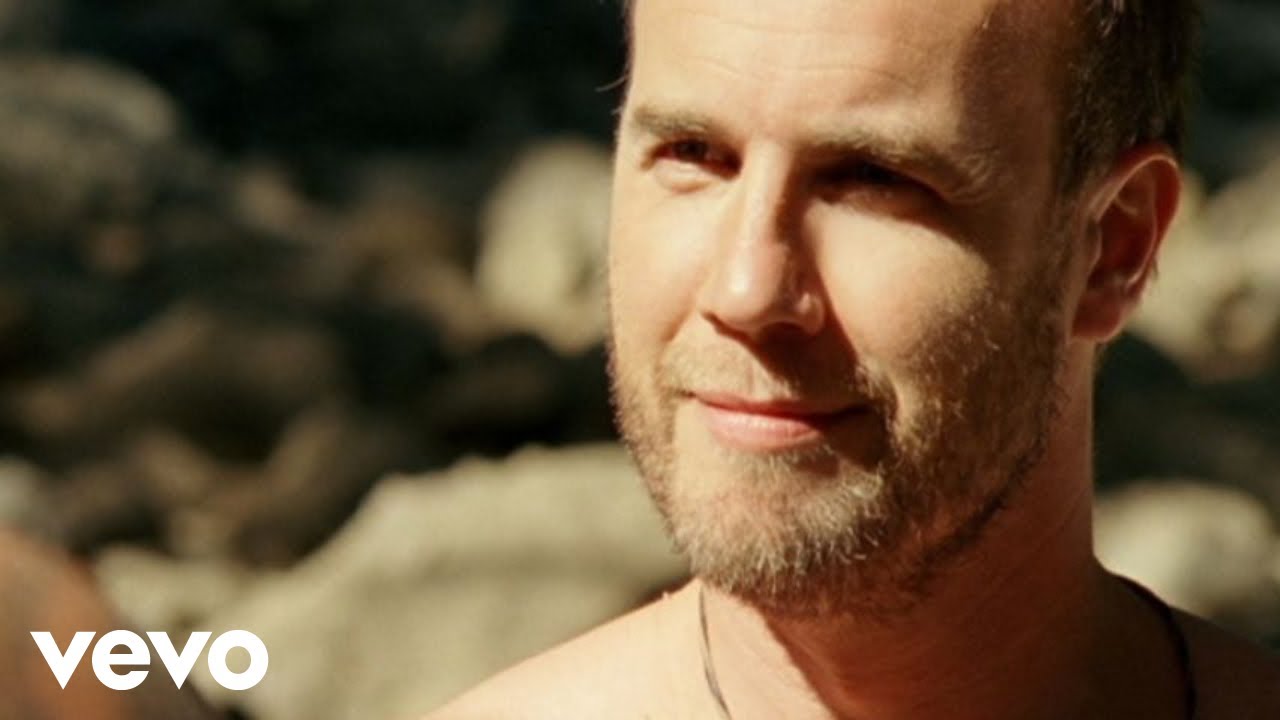
Another pair of Northerners, though whether they’re sexier than Neil and Chris depends on your POV, though Robbie and Gary were certainly hugely influenced by the older fellas, musically at least.
Marking the first time the estranged twosome worked together since Williams left Take That in 1995, Shame centres heavily around the two singers fixing their shattered relationship in a Bareback Mountain kind of way. One of the best redemption tunes of recent times, anyone who thinks this gentle country-twinged folk ode has a touch of The Beatles’ Blackbird about it would, in my opinion, be correct.
Shame was the new single appended to Robbie’s second hits collection In And Out Of Consciousness, but it wasn’t the first time Trevor had produced him. Horn had already been head honcho on RW’s eighth album from 2009, Reality Killed The Video Star, with its title referencing Buggles and highlighting their mutual distaste for reality television and music competition shows. I wonder what the judge of (among others) Walk The Line and Let It Shine Mr Barlow thought of that? Either way, Reality is probably the most synth-driven LP you’ll ever get from the Burslem boy, with Starstruck sounding like a lost twin of Visage’s The Damned Don’t Cry, and Last Days Of Disco echoing the bittersweet paranoia of Eurythmics’ Sweet Dreams (Are Made Of This).
With the ego still landing in the read-view mirror, the 2019 album Trevor Horn Reimagines The Eighties also kicked off with its lead 45, Robbie’s reversion of the Tears For Fears drivetime deity Everybody Wants To Rule The World, chosen because (to quote the Horn) “it was an alpha male song”. With a jaunty start that wouldn’t feel out of place in a West End musical this beautifully subtle war song was given a lovely Sinatra-esque swing bent which would have slotted seamlessly onto 2001’s Swing When You’re Winning.
But the burning question in everyone’s mind, and as put to Trevor Horn himself during a Guardian Q&A, is did video really kill the radio star? The conclusion? “Video did not kill the radio star. Maybe he had him down for a couple of minutes but he came back up again swinging and he’s still healthy.”
Catherine Walters
* Trevor Horn reveals 30 minutes into a recent POP History makers podcast interview with former MTV Europe news presenter Steve Blame that he once had lunch with Bowie at Iman’s then apartment in West Hollywood “because I wanted him to do a song that Bruce [Woolley] and I had written for the [1992 Robin Williams] film Toys, called Happy Worker. In the end I did it with Wendy & Lisa and Tori Amos but initially my idea was for him to do it. I would’ve loved to work with him… but at the end of the lunch he told me he didn’t like the song. He was a bit rude about it, actually.”