




Or, the time when the Purple One did Parade and Under The Cherry Moon
“You don’t have to watch Dynasty to have an attitude.” Or Shanghai Surprise, come to that.
Let’s not beat around the Kate Bush. No musical figure since Bowie had swung as fluently and flamboyantly from style to style as Prince Rodgers Nelson. Even a cursory stream will throw up a technosoup that may include, but not limited to, uptown funk, smooth soul, big band jazz, cabaret showtunes, emotive rock balladry, deft dance pop, horny Hip-Hop, and… want me to go on?).
By the time of opus eight everything had coalesced, and Prince was arguably the most influential artist, producer and arranger of the 1980s. And with brilliantly unsubtle song titles such as Jack U Off and I Would Die 4 U, almost certainly the most economically creative speller in pop (thou weer crazee not to acknowledge that the slightly less gud Slade would cum cloze).
Undaunted by the criticism 1985’s Around The World In A Day’s the retro weirdness received, the Minneapolis marvel continued to pursue his psychedelic affectations on the altogether more punchier Parade, an altogether more cinematic sounding affair. Hardly a surprise when the album functions as the associated soundtrack to Prince’s second film folly, Under The Cherry Moon, a monochromatic throwback to the French Riviera of the 1940s, shot in ever beautiful Nice, from where I write this.
Entering in fourth position in the UK’s first album chart of April 1986 (its peak position, in fact; held off by an eclectic triumvirate of a Hits 4 compilation, Dire Straits’ hoary old behemoth Brothers In Arms, and the Pet Shop Boys’ debut, Please), every track on Parade shows another element of the multi-talented Minnesotan at the peak of his 80s pomp, with the trusty Revolution layering on exquisite amounts of funky synths, electric licks and honking horns. A group love bizarre, then.
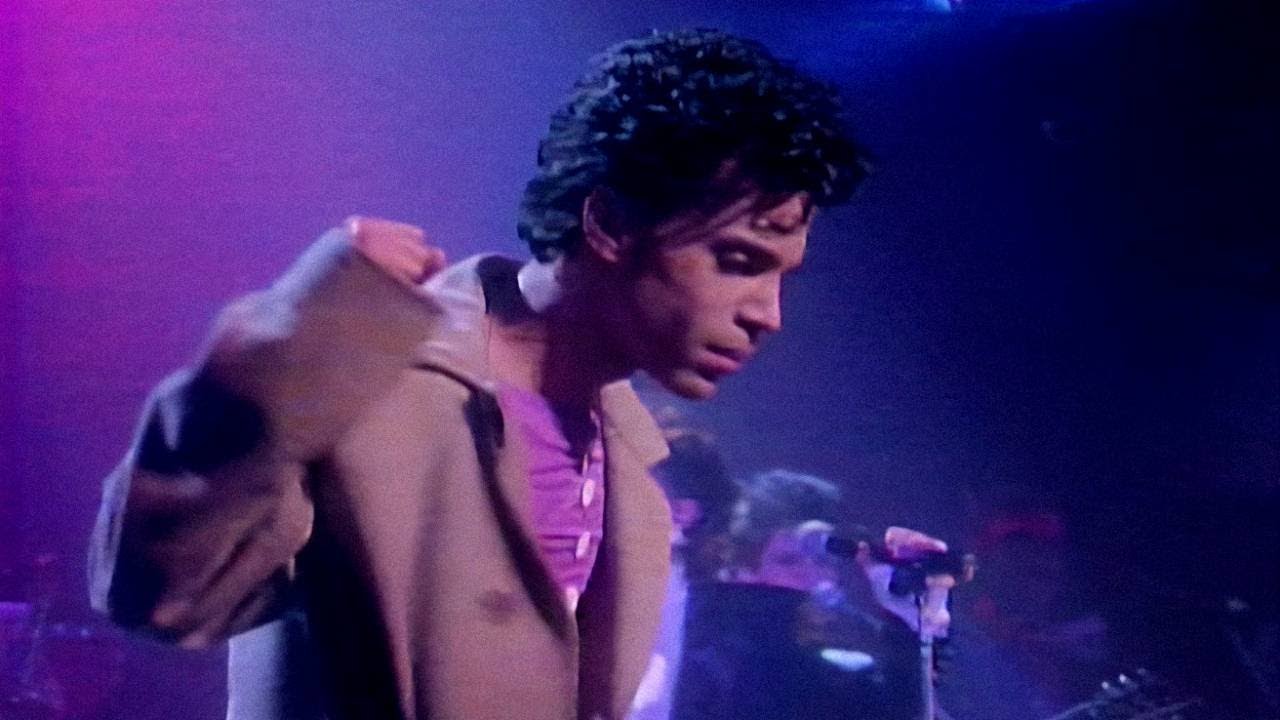
Parade was the last of a trio of albums Prince recorded alongside said backing group – the first to officially credit them being Purple Rain – but if there was any unrest in the ranks it wasn’t showing. PRN makes good his first use of a theatrical string score, performed by an orchestra of 67. Arranged by Clare Fischer at Monterey Sound, the ensemble help shift musical moods and veering textures from song to song, with even a couple of ersatz cabaret cuts (the slightly underwhelming mood-muzaks, Venus de Milo and Do U Lie?), dumbfounding many of the more funk-rock faithful at the time.
Witness how the carnivalesque big band opener Christopher Tracy’s Parade gives way to the spare, steel drum insistence of New Position, which morphs into the electro-orchestral hypnosis of I Wonder U, notable as the first track on a Prince album where the artist removed his own vocals to let a band member — in this case Wendy Melvoin — take centre stage. Four on cabaret floor, Cherry Moon’s title track is all Weimar cabaret, an opiated chamber ballad more Weill than vile.
Despite the diverse genre-hopping, the material is wedded to a narrative that makes for a satisfyingly coherent listening experience. Parade picks up steam as it moves through the tracklist, with the lengthier tracks on side two (subtitled “end”) feeling more like fully-formed ideas compared to the briefer vignettes of the first side (‘intro”).
The tunesmithing is on point, the instrumentals are smooth and fleshed out, and Prince’s voice displays a perfect balance of emotion that is never overdone, it just threads the needle in terms of sustaining belief.

Despite the impending demobilising of The Revolution, the band seem determined not to play it safe, and their musical adventures do nothing to undercut the melodic pop sensibility of the record. The amount of sonic ground they cover in the dozen tracks is remarkable, particularly on the four 45s, which were:
The propulsive baby workout of Girls & Boys: at heart a jazzy camper with an electro-funk chassis. The French voice belongs to Marie France, Prince’s clothes designer.
The absurdly styled Anotherloverholenyohead (the title of which he doesn’t quite sing): a preachy break-up funk-o-naught of a jam which also failed to impact any major countdown, presumably because shop assistants struggled to find it on their stock list when it was requested.
The slinky, bushy-tailed Mountains: a towering Stevie Wonder meets Earth Wind And Fire groove, shimmering imperiously on waves of guitar, horns and keyboard textures.
Probably Prince’s great ‘lost’ single, it missed the Top 40 in Britain, which is all the more ironic seeing as it started life as a demo Wendy & Lisa laid down in London with engineer Susan Rogers at Advision’s Studio One, which was purposefully designed with a large live floor area tailored for natural acoustic instruments. The very same November ’85 week another eminent duo, Neil Tennant and Chris Lowe, were holed up next door in the more electronic-enabling Studio Two recording the aforementioned PSB’s Please.
Susan Rogers:
“What happened is when we were in the south of France doing Under The Cherry Moon it’s around Thanksgiving time and Prince sent Wendy, Lisa and me to London for a week. Our instructions were to go into Advision Studios and just write some stuff; record some stuff and bring it back to France so he could get on with the movie. And we did. Wendy came up with the riff for Mountains. But for Lisa’s part, she sat down at the piano as this goddess is wont to do. Gosh, what piano player; she played this gorgeous piece. Again, there were no lyrics but it was just so frickin’ stunning.”
Wendy Melvoin:
“To be as young as I was at the time, and to be that productive, was an honourable feeling. And to do it with the person that I was in love with — my girlfriend — and to also be doing it with who I felt was the most important artist of my generation other than two others I had revered as much — Joni Mitchell and David Bowie — so those three people. And to have me be a part of that every time I stepped back and sort of satellited myself in the room.
“In the quiet moments of the night after a project was done and you’d listen back to your work — and what you know your input was and what made him happy and what made him feel inspired — gave me so much energy and motivation to keep at what I was doing. I felt like my voice was important. And it was even stronger because of my musical collaboration with Lisa. Our sound as a duo was so strong at that point — it still is very strong now. It’s almost rarified now; back then, it was used for good.”
You fifth say there’s nothing greater, but there’s one further 45 we’ll come to in a bit, but I can’t write a review of Parade and not single out its mournful show closer.

As heartbreaking as it is harsh, there can be no more prophetically poignant finale than Sometimes It Snows In April. A melancholic, elegiac piano ballad which acts as metaphor for unexpected tragedy and the unpredictable turns of life, it quite literally cuts the deepest, whether or not you even knew it was recorded on 21 April 1985 – ie 31 years prior to its creator’s death on the same date in 2016. And while he ignored many of Parade’s cavalcade of songs in his later set lists, April was a mainstay in Prince’s live repertoire right up to the final show.
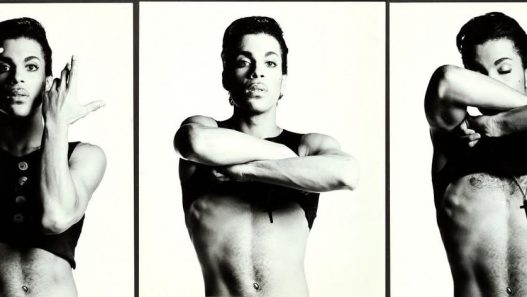
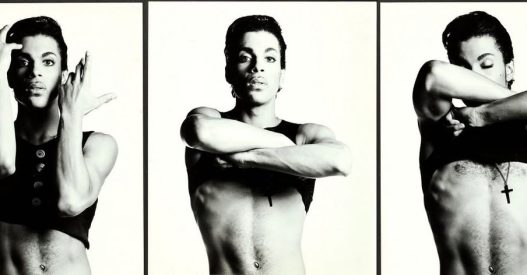
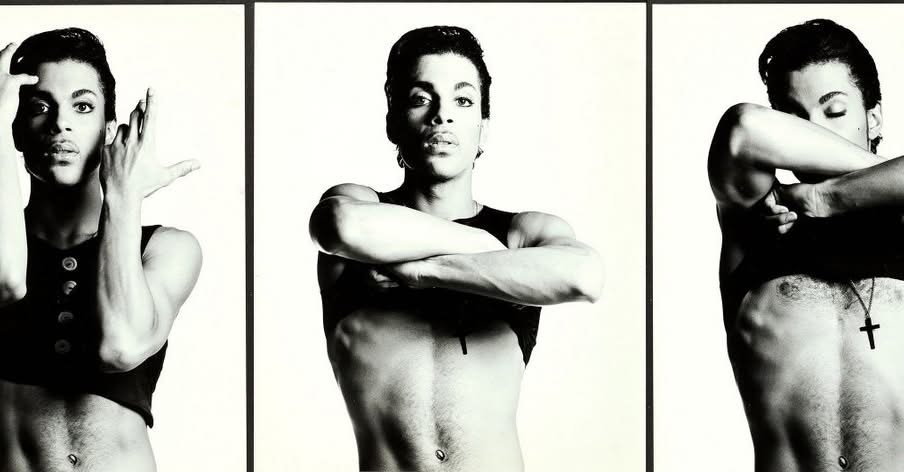
Indeed, having witnessed the Piano & A Microphone swansong stopping over in Sydney three months before the fateful day, when the news broke the first Prince album I reached for was Parade. I marvelled at how in Jeff Katz’s inscrutably iconoclastic photograph adorning one of my favourite record sleeves ever, Prince seemed to be channelling Little Richard at his most flamboyant pencil-moustached pomp. And, with a knowing certainty, bloviated in the direction of the boyf that “all the best male pop stars had a slight androgynous quality.” Like David Bowie, for instance, who went to the great Starman in the sky 14 weeks earlier.
And like the Thin White Dame, the Purple regnant could often be viewed as a little over-cryptic in the lyrical department. On Parade, however, his offbeat religious and sexual tropes develop into motifs that actually give the record weight. If it had been expanded to a double album to include further music from the movie and assorted leftovers, the set could have equaled the subsequent Sign ‘o’ the Times in stature, but as it stands, it’s an astonishingly rewarding near-miss. The Lodger of his catalogue, dig if you will.
It’s for that reason you’d be hard pushed to find Parade topping many people’s favourite Prince album polls, but it’s woefully easy to forget was that, unlike his so-called rival Michael Jackson, Prince was the king of the unexpected. While many admirers exalted Purple Rain and longed for a sequel of sorts, the Minneapolis marvel would react against that, refusing to be confined or categorised.
Sure, he was doing a lot of stack-heeled strutting and indulging neo-classical French fancies, but Parade was Prince in full on peacock mode, and if you’ve ever heard the 12-inch versions of the singles extracted from the album, you already know that he could expand, stretch out, and make an ocean out of a river. Case in point: he wastes nary a second of the 10-minute mix of Mountains as soaring Atlanta Bliss brass and wall-of-sound trumpets romp across the cavernous soundscape. Yet to be commercially issued on an album, the unexpurgated peak serves as the dynamic visual backdrop for Under The Cherry Moon’s closing credits.
And that was one of the most impressive things about the Prince vision; his incredible sense of economy, and nothing typified that simplicity than on one song in particular.
Guitar strum please.
“Uh!”

Ah, yes, Parade’s lead track, its first 45, and one of Prince’s greatest ever singles. Oh, hang on, it’s one of the greatest singles by anyone. Period.
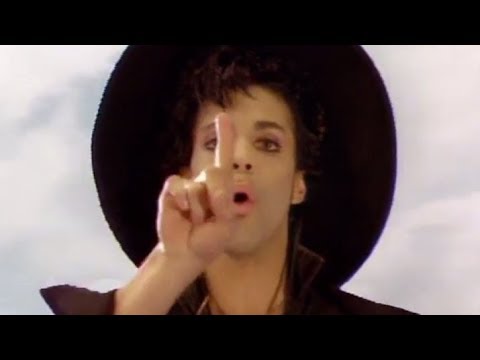
A king amongst cuts, Kiss compresses the sharp spartan sensibility of the Nu Wave into Prince’s own sex-funk agenda, hitting hard with just a bone dry guitar, keyboard, drum machine, and layered vocals. But the track almost missed the cut entirely, until its author famously snatched it back when he realised its commercial potential.
While he was in the early stages of formulating Parade, the Purple One helped bassist Mark Brown (AKA Brown Mark) and David Rivkin (alias David Z.) with their Revolution offshoot outfit Mazarati by gifting them a couple of songs. One was 100 MPH, a catchy joint with a clever little staccato delivery that ended up on the band’s self-titled album. The other was the bare bones acoustic demo of Kiss, a track its originator deemed not worthy of further attention.
After letting the guys puzzle over it, spending the whole night reworking it, Prince changed his mind and reclaimed the song, either (depending on who you believe), saying, “It’s too good for you guys,” or being taken aback on hearing his protégé’s remarkable results, couldn’t resist taking it back for himself.
Then, although he promised to list Rivkin as the song’s co-producer, he ended up being listed only as the “arranger”. In Jason Draper’s book Chaos, Disorder, and Revolution, he further reports that the ”main elements of the song originated from Rivkin and Brown’s version.”

The story reads a bit differently in Alan Leeds’ sleeve notes for 1993’s The Hits/The B-Sides compilation. There, Leeds quotes David Z. as recalling the Kiss demo as “just voice and acoustic guitar” and as not having “any real indication of a groove yet.” It was “just the raw idea”. David Z. and company “started a rhythm track and put on some background vocals” but thought the track was too much of an oddball to finish.
Leeds goes on to say, “Once Prince was able to gauge Mazarati’s lack of interest in Kiss, he simply reclaimed it and finished it.” Draper too notes that the final version bizarrely buried as track ten of Parade involved “stripping away a lot of the detail Rivkin and Brown had added” to give Kiss a minimalist funk feel. Nevertheless, there’s certainly significant elements of Mazarati’s recording on Prince’s completed master, including their “aah-AAA-aah” backing vocals.
Still, it would never have occurred to anyone else to make the groove deeper and the arrangement more thrilling by mixing out the bass altogether (cf When Doves Cry) and singing it in a delicate Curtis Mayfield-style falsetto. But that’s why he was Prince and no one else was. If I can paraphrase the diaries of Brian Eno, he had “the nerve to be simple,” whereas Bowie just didn’t have it in him.
The rest is, so the saying goes, history: top tens across the globe (and a rash of number ones), a Grammy in the bag (hopefully not in the same one as the veal) and inclusion on every greatest-singles-ever list published since. Probably.
To get all muso-ey, Kiss is a flash slash in the air surrounded by reverberated space. Even now, whenever the song is played it seems to open up a vacuum around it. It’s almost unfathomably funky, but it keeps pausing, going silent, and its silence is what propels the groove forward. James Brown must have been furious.
Kiss is three and three-quarter minutes of ice cream cool pop at its finest, yet a fellow Bletchley college student told me at the time that Kiss was “barely a song at all”, which kind of misses the point. Massively so. Because have you noticed how the greatest Prince singles all have the most incredible, indelible stop-what-you’re-doing-right-now intros? Kiss, Let’s Go Crazy, Take Me With U, When Doves Cry, 1999 et al, all with euphoric dramatic starts instantly recognisable within a split second.
But don‘t take my word for it…

The third of his five Billboard No.1s in America, the lippy one peaked at a respectable sixth place on the UK chart the week dated 22 March 1986 but it really should have done much much better.
What were the quintet blocking Kiss getting into the Top Five? A quartet of golden oldies by singers all Prince’s seniors, most of whom had been recording since the Fifties or early Sixties: Diana Ross’ Bee Gees-helmed Chain Reaction, David Bowie’s jazz throwback Absolute Beginners, Cliff Richard’s Living Doll retread with the Young Ones, Jim Diamond’s Hi Ho Silver whining telly theme… and Prince himself, as the author of The Bangles’ pretty pop confection Manic Monday, which the diminutive one penned under the pseudonym Christopher, his avaricious gigolo character in Under The Cherry Moon of course.
Along with the admittedly sub-par Côte d’Azur cinematography it was crafted to support, Prince’s recorded work in 1986 encapsulates a compelling time period. With Kiss as its key, the album’s core is its dance tracks, bracingly crisp and airy, with those offhanded register-vaulting vocals and that peculiar rhythmic lurch no other artist could duplicate. A seminal signpost in need of serious reappraisal, Parade is, in a funny old way, still waiting for its moment to really shine. I believe they call it Super Deluxe Edition these days.
Lastly, if Prince had done nothing but stand stock still onstage and performed other people’s material, he’d have still bagged a place in the pop firmament as one of the greatest singers and guitarists of his generation. He was that good. Perhaps only James Brown, his most obvious influence, had that annoying habit of putting on even more incendiary live shows.
Forty years ago this very week, the pint-sized showman was in London for a three-night stint at Wembley Arena that were literally the hottest shows of the summer. To put that into perspective, his only other UK performance had been his half-empty British live debut of June 1981, the notorious lingerie at the Lyceum showcase in advance of Controversy for a few hundred mainly music industry professionals on the very road I also started life on, Covent Garden’s the Strand.

By August ’86, such was his exalted status that tickets for the Wembley triumvirate were going for silly money, and the charged, expectant audiences included Other Famous Folk paying (gasp) £12.50 a head. Not only that but the arena’s Royal Box (how apt) was positively heaving with hob-nobbing A-listers wondering if it’s a free bar, including but not limited to these rum sorts:
Bananarama, Duran Duran, Echo & The Bunnymen, Eric Clapton, Frankie Goes To Hollywood, Marc Almond, George Michael, Pete Burns, Pet Shop Boys, Phil Collins, Sigue Sigue Sputnik, Spandau Ballet, Thompson Twins, Midge Ure, Bob Geldof and Paula Yates. Not only that but stringing it on stage were Ron Wood and Sting, who deigned to join his holiness on one of the nights for a ragged extended funkout of the Rolling Stones’ Miss You. Phew.
And for the record, David Bowie caught the show immediately prior to the Wembley wonders, at New York’s Madison Square Garden and loved it, the year before he went and referenced his ultimate usurper on the ghastliest album of his entire career. Is that the sound of a Little Red Corvette driving by?
A transportive and imaginative performative paradiso in tight black toreador pants, the Parade era tells us so much about where Prince had been by 1986 and operates as so much more than a transition period for projects to come.
It’s where this much-missed maverick singer, producer, songwriter, composer, arranger, multi-instrumentalist, and bandleader stepped into the full breadth of his abilities to shoulder his dichotomous appetites for uncompromising art and competitive commerce. A rare snapshot of this eccentric enigma at his most blissfully curious and hermetically sealed. Because, ultimately, Prince was only competing with Prince.
And the best man won. Swingorilliant.
Steve Pafford


